
When you press the flush and hear nothing but silence, it’s one of those moments that throws the whole morning off.
A toilet cistern that won’t fill is a small domestic problem, but it can become maddening fast. The good news is, most causes are minor, and if you live in the UK, they tend to follow the same patterns: debris, limescale, valve failure, or low water pressure.
Before calling a plumber, it’s worth understanding how the cistern actually works and what can go wrong.
The fixes below are specific to UK toilets, using real parts you’ll find in most homes, from Torbeck and Fluidmaster fill valves to the stop taps tucked under sinks.
How A Toilet Cistern Fills: The Basics
Every flush starts and ends with the same simple principle: gravity and water pressure working together.
When you flush, the cistern empties through the flush valve, letting water rush into the bowl. Then, as the level drops, the fill valve opens automatically to refill the tank.
The float, a small buoyant component, rises as the water does, shutting the valve once it hits the correct level.
In the UK, you’ll find two main types of fill valves:
- Side-entry valves that connect near the top or mid-point of the cistern.
- Bottom-entry valves that feed water in from below.
Most modern units are mains-fed, though some older houses with loft tanks use low-pressure, gravity-fed systems.
That difference matters because a fill valve designed for high pressure can struggle in a low-pressure setup.
If the cistern isn’t refilling, you’re usually looking at one of seven culprits. Let’s go through them, from simplest to more involved.
1 - Check The Isolation Valve And Stop Tap
Start with the easy win. Many so-called “broken toilets” just have their isolation valve partially closed.
This small slotted screw valve controls water to the toilet. It’s usually located on the pipe feeding the cistern. If the slot in the screw head is in line with the pipe, it’s open. If it’s at a right angle, it’s closed.
Grab a flathead screwdriver and turn it until it’s inline, but don’t force it if it feels stiff. These small valves seize easily, especially if they haven’t been touched for years. If the valve is fine but there’s still no flow, the problem might be further up the line.
The main stop tap (usually under the kitchen sink, near the water meter, or sometimes in the utility room) might be partially closed. You’d be surprised how often this happens after plumbing work or water meter replacement.
If you’re not sure where yours is, this guide, Find Your Stopcock in Minutes, will walk you through the common hiding spots and what to do if it’s jammed.
If the stop tap is open and the water pressure to other taps is fine, move on.
2 - Check The Fill Valve
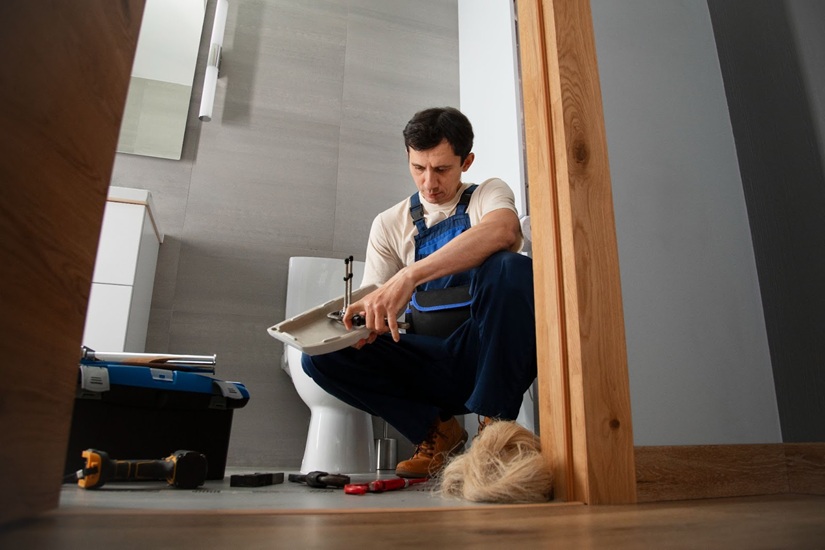
The fill valve is responsible for refilling the cistern after every flush, and it’s the part most likely to fail.
Modern fill valves (like Fluidmaster, Siamp, or Torbeck models) use a small diaphragm and internal piston to control water flow. When the diaphragm gets old, clogged, or torn, the valve stops working properly.
You’ll need to isolate the water supply first. Once the water’s off, remove the valve cap or clip, most twist off by hand.
Inside, you’ll see a small rubber or silicone diaphragm. If it’s warped, brittle, or covered in grit, that’s your problem.
Rinse it clean or, better still, replace it. They’re cheap, usually under a fiver. If the valve body is cracked or the mechanism is jammed, it’s often easier to fit a new fill valve altogether (about £10-20).
Don’t forget the inlet filter screen at the valve’s connection point, this tiny mesh filter can clog with sediment from old pipes or recent plumbing work. Pull it out, rinse it under the tap, and reinstall it. It should take a minute or so to fill.
3 - Check The Float And Float Arm Movement
The float is what tells your cistern when to stop filling. If it’s stuck, misaligned, or full of water, the system won’t work.
Older UK cisterns have a ball float on an arm, easy to see and adjust. If it’s stuck to the cistern wall or tangled with other bits, gently free it.
You can test by lifting the float manually, if water starts running again, the float was the problem.
Newer cisterns have integrated float cups on the fill valve. These can stick due to limescale or wear. Adjust the small screw or clip that sets the height of the float, clockwise usually raises the fill level, anticlockwise lowers it.
If the float has water in it, replace it, it’s no longer buoyant enough to work.
Limescale can also cause the mechanism to drag. If you’re in a hard water area, this next bit is worth reading.
4 - Clean Out Debris And Limescale
Hard water is a silent saboteur in UK plumbing. Over time, limescale builds up inside fill valves, around floats, and across sealing washers.
A gritty, chalky residue is your giveaway. The fix is mostly cleaning. Turn off the water, empty the cistern, and remove the valve or affected parts. Soak them in vinegar or a descaling solution for an hour, then scrub with an old toothbrush.
Debris can also enter from the supply pipe, especially after mains work or if the stop tap was recently turned off.
Before reattaching the pipe, flush the line into a bucket, that quick burst will clear out any sand or grit that’s blocking the inlet.
If you want to know more about backflow and protection, especially if you’ve got an outside tap connected to the same system, check out How to Fit an Outside Tap. It’s surprisingly relevant because backflow can carry debris straight into delicate cistern parts.
5 - Check Water Pressure And Supply Issues
A cistern that takes ages to fill, or not at all, might not be beyond repair; it could just be suffering from a lack of water coming in.
UK homes typically get water delivered at a pressure of around 1–3 bar, and anything below 1 bar can cause problems with the modern fill valves, which are designed to work under the standard pressure of mains water.
Places with older houses and rural homes with gravity-fed tanks in the loft often experience this problem.
To figure out what’s going on:
- Try turning on a cold tap in the same bathroom. If the flow's really weak, the issue is likely to be with the water pressure.
- If all other taps are fine except the toilet, then the problem's probably with the local plumbing, it might be the malfunctioning isolation valve, or possibly there's a kinked hose.
If the pressure’s low across the whole property, get in touch with your water supplier. It might just be some temporary work going on on the main or a partial blockage in the service pipe.
It’s also possible that the pressure-reducing valve next to your stop tap has been turned down too low. Be careful not to go messing about with that one, it’s a job best left to a professional plumber.
6 - Take A Look At The Flush Valve And Seal
There’s a chance that the cistern is actually filling up, it’s just that water’s escaping straight into the bowl.
A worn-out flush valve seal can cause water to leak away constantly, which stops the level from rising. You might pick up on a faint trickle sound or see water rippling in the bowl between flushes.
A simple test is to add a few drops of food colouring to the cistern and then wait about 10-15 minutes. If the colour starts showing up in the bowl, your flush valve seal is leaking.
To fix it, switch off the water supply, flush to empty the tank out, and then take out the flush valve assembly. On most modern dual-flush toilets, the seal is a simple rubber ring that twists off for replacement.
Dual-flush push buttons can also get misaligned and leave the valve partly open. A quick tweak or clean-up can often sort that out.
7 - Replace Faulty Components Or Call A Plumber
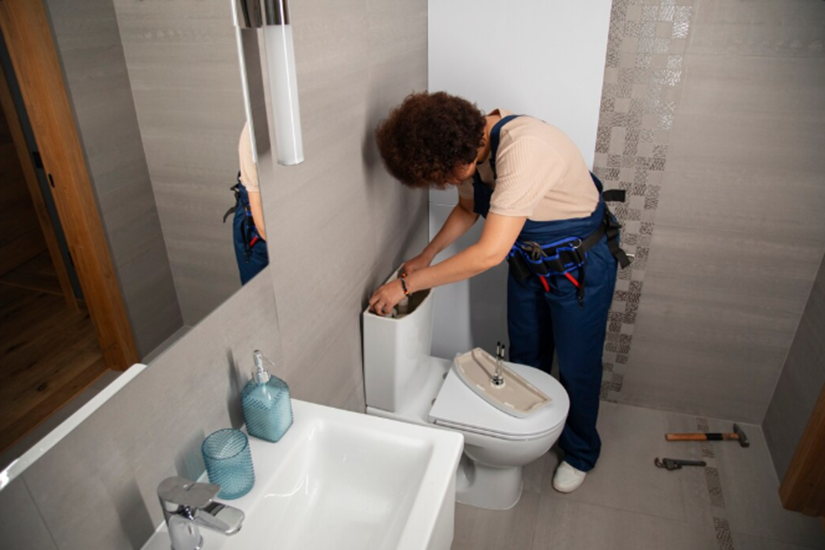
Sometimes it’s just not worth wrestling with an old mechanism. Fill valves, floats, and seals are all consumable parts, designed to be replaced, not endlessly repaired.
If your cistern’s internals are more than a decade old, replacing them wholesale can save time and frustration.
A new Fluidmaster or Dudley fill valve, paired with a reliable syphon or flush valve, typically costs less than £25–£30.
Here’s the line between DIY and “get a plumber”:
- Persistent low flow even after cleaning and valve checks.
- Leaks around the cistern’s base or supply pipe.
- Rusted or inaccessible fittings.
- Any job requiring new pipe connections.
A professional plumber can also pressure-test the line and check for hidden leaks. Sometimes the problem’s not in the cistern at all, but underground or in the supply feed.
There’s a helpful read here: How to Detect an Underground Plumbing Leak Without Excavation, that explains the early signs to look out for.
And if you’re in the trade or training, here’s a modern twist. The Tradefox simulation app lets plumbers and electricians practice diagnostics like this in a safe, virtual environment, no floods, no live water, just hands-on skill building. It’s surprisingly realistic.
Preventing Future Cistern Fill Problems
Once everything’s working again, a few habits will keep it that way:
- Check the isolation valve every few months to make sure it hasn’t seized.
- Clean the inlet filter once or twice a year.
- Descalcify components regularly if you live in a hard-water region.
- Use only WRAS-approved parts when replacing valves or washers, it ensures compliance with UK water regulations and better reliability.
If you’re refitting a bathroom, consider dual-flush mechanisms and water-saving valves. They’re more efficient and better suited to modern plumbing pressures.
Final Thoughts
A toilet cistern that won’t fill isn’t a disaster, it’s just a conversation between valves, pressure, and patience.
In most cases, you’re looking at something mechanical: a tired diaphragm, a blocked inlet, or a float that’s seen better days.
The key is methodical checking. Start at the water source, end at the flush valve, and don’t skip the simple stuff. Isolation valves are behind more headaches than anyone admits.
With the right parts and a calm approach, most cistern issues can be fixed in an hour. And if not? At least you’ll know when it’s time to call someone who can.