
Tiles look almost indestructible when they’re first laid, all sleek and solid and unshakeable.
But anyone who’s ever walked into a bathroom six months after the job’s been finished and found hairline cracks spreading through the grout like a network of tiny fault lines knows how quickly that illusion can crumble.
Underneath those tiles, the floor never really stops moving, it swells up when it gets hot & shrinks back down when it cools off, and that’s where an uncoupling membrane comes in to help out.
It’s not the most glamorous part of a tiling job, but it’s probably the bit that really makes the difference between a floor that lasts for decades, instead of just a few years.
So let’s have a gander at just what these mats do, when they’re actually necessary, and how to tell if a particular job genuinely needs one or if you’re just overcomplicating things.
What On Earth Is An Uncoupling Membrane?
Think of an uncoupling membrane as a bit like a shock absorber for your tiles. It’s a thin layer usually made from plastic or some other composite material that sits between the subfloor and the stuff you stick the tiles to.
Its main job is to cope with the stress of a floor that’s moving around underneath, so the tiles above don’t crack under the pressure.
Loads of tilers in the UK are familiar with Ditra-style membranes, those orange, waffle-patterned sheets of polyethylene, and while they’re not the most thrilling bit of kit, they’re lightweight, easy to roll out and stick down, and they bond well to the tile adhesive.
You see brands like Schlüter-DITRA, BAL Rapid-Mat, and Prodeso on UK jobs all the time.
To be fair, some of these membranes do have a bit of a waterproofing function as well, but that’s not what they’re designed to do.
Their main job is decoupling, stopping the stresses from the floor beneath from pushing straight up through to the tile layer.
In the UK, these products all fall under standards like BS 5385-3:2014, which deals with tiling in wet areas, and BS EN 12004, which is all about adhesive types.
If you stick to those rules, you know you’re not just winging it, you’re working to a proper set of best practices.
Why Tiles Crack: Movement, Moisture, And Misjudgement
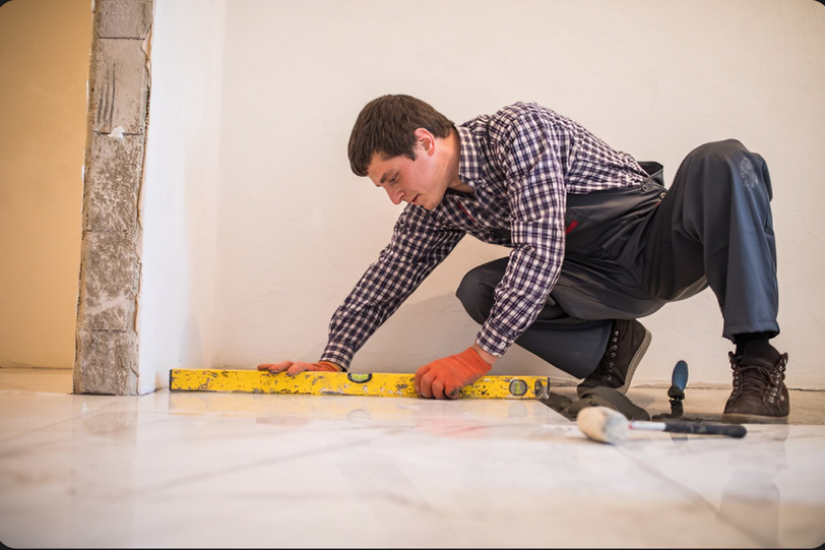
Tiles themselves are rigid and unforgiving, which shouldn’t be a surprise, but subfloors are a whole different story.
Subfloors expand, shrink, flex, and twist, just a little bit, depending on what they’re made from and how the rest of the building behaves.
A few things to keep an eye out for:
- Thermal expansion: it's a real pain when you've got underfloor heating installed.
- Moisture shifts: concrete and screeds absorb and release water over time, like a sponge in the bath.
- Timber deflection: wood floors naturally flex under weight, it's just the way they work.
- Shrinkage: new screeds keep curing and moving for weeks after they've been laid, a bit like a new pair of trainers that still need to break in.
When all that happens, the tile adhesive tries to hold everything together like a tight rope, but it can only take so much, and usually, it’s the grout or the tile edge that ends up taking a hit.
It’s a bit like gluing a fragile glass vase to a squishy sponge, you can only expect so much before disaster strikes.
Cracks in a neat grid pattern are a dead giveaway of movement below. The frustrating part is that most of these failures could’ve been avoided by slapping down a decent membrane that costs less than a few bucks a square metre, less than a coffee from a takeaway joint.
How Uncoupling Membranes Work Their Magic
The real magic happens in the design of the membrane. Those little waffle pattern bits you see on Ditra mats aren’t just for show, they form tiny pockets that let the adhesive and tiles move slightly independently of the floor below.
Think of it a bit like a suspension bridge, the tiles ride high above while the substrate flexes and moves underneath.
The membrane absorbs the movement so the tiles don’t get sheared off. Lots of membranes also have tiny air channels that let any excess moisture from the screed release harmlessly, rather than getting stuck.
They’re especially effective over:
- New screeds that are still letting out moisture.
- Heated floors that are constantly going through temperature swings.
- Timber floors that flex or expand with changes in humidity.
- Mixed substrates, where you got old wood or patch repairs mixed in with the concrete.
The upshot is the tiles behave like they’re floating, securely locked in place but insulated from the tiny movements happening below.
When You Definitely Need An Uncoupling Membrane
There’s a temptation to try to skip out on them when the budget gets tight but in some cases, going without one is a roll of the dice that rarely pays out.
1. With Timber Floors Though
Timber floors suspended over various gaps are a strain on the structure, especially when it comes to movement. Joists flex, boards shift & then there are the humidity changes – every little thing can cause the whole system to go awry.
Even if your sheet is with ply or cement board, there’s still a slight bounce, a membrane helps absorb that tension before it reaches the very bottom of the tile bed.
Put a membrane together with a proper backer board and a flexible adhesive, and you’ve got a setup that can withstand years of movement without so much as a tiny hairline crack coming through.
2. On New Or Hairline Cracked Screeds
Even a tiny little hairline crack in a screed can “telegraph” through to the tile adhesive – no problem. Membranes act as a mechanical break between the two layers & as such, the crack stays put where it is.
3. When You've Got Underfloor Heating In The Mix
Constant heating and cooling cycles make your substrates expand and contract, without a break in between the two layers.
Tiles are forced to move with it, and they don’t take kindly to being stretched one bit. The Ditra-Heat systems were designed specifically for this very reason.
4. When You're Using Large Format Tiles
The bigger the tile, the less forgiving, the big porcelain slabs, think 600x600mm or bigger, really magnify even the tiniest little shifts in the subfloor. A membrane spreads that stress out & saves you from cracked corners later on.
5. When You're Dealing With Mixed Or Differential Substrates
If you have joined an old concrete section to a new extension slab or blended timber and screed, then those materials will always move differently. An uncoupling layer lets each do its thing without ripping the floor apart.
The bottom line is: if the floor beneath your tiles is likely to move in the slightest, you need something flexible in between it.
When You Might Not Need One

There are exceptions. Not every floor needs to be wrapped in orange plastic.
If you’re tiling onto a stable, old concrete slab that’s fully cured, crack-free, and free of heating or timber elements, you can often skip the membrane. Small-format tiles in low-traffic, low-moisture rooms generally cope fine.
But be honest about what you’re working with. A floor that looks solid today can still shift with temperature or moisture. The cost of a membrane is small compared to ripping up a failed tile bed six months later.
Rule of thumb: when in doubt, decouple.
Types Of Uncoupling Membranes In The UK
Polyethylene (e.g. Schlüter-DITRA)
The most recognisable type, bright orange, dimpled, lightweight, and great at managing moisture. Perfect for underfloor heating setups.
Fibreglass Mesh Mats (e.g. BAL Rapid-Mat)
Thinner profile, minimal floor height build-up. Ideal for refurbishments where every millimetre counts.
Composite Systems
Multi-layer membranes that combine decoupling and waterproofing, common in wet rooms and bathrooms.
Each has a place. Polyethylene versions are the all-rounders; fibreglass mats are more discreet; composites are for specialist wet areas.
How To Install An Uncoupling Membrane (Without Complicating It)
There’s a right and wrong way to lay these. They won’t rescue poor prep or bad adhesive.
- Prep properly. The subfloor must be clean, flat (within ±3mm over 2m), and sound.
- Pick the right adhesive. Flexible (C2-rated) thinset adhesive under and above the mat.
- Trowel evenly. Use the right notch size to ensure full contact.
- Embed firmly. Roll or press the mat into the adhesive to remove air pockets.
- Tile on top. Apply tile adhesive, back-butter large tiles if needed, and leave expansion gaps at edges.
If you’re dealing with plumbing penetrations or wet areas, seal joints and corners with compatible waterproofing strips. You’d be surprised how many bathroom leaks start because someone skipped that 10-minute step.
And if you’re ever working near stop taps or external plumbing, it’s worth knowing how to fit and isolate outdoor connections correctly.
See this guide on fitting an outside tap with isolation and backflow protection. It’ll save you from damp surprises beneath those tiles later.
Mistakes That Lead To Failure
Some of the most expensive failures happen because of small oversights.
- Using a non-flexible adhesive under the mat.
- Trapping air pockets beneath it
- Laying it over dusty, oily, or uneven subfloors.
- Ignoring expansion gaps around walls and columns.
- Assuming “that old concrete’s fine” when it’s still curing.
The irony is, most of these are preventable with a bit of prep and patience. In plumbing, it’s not so different, small misses cause the biggest headaches.
Anyone who’s tried finding a hidden water leak under a tiled floor knows how critical prevention is. Here’s a detailed guide on detecting underground plumbing leaks without excavation that’s worth keeping bookmarked.
Cost, Value, And Long-Term Payoff
At around £8–£15 per m², membranes aren’t cheap, but neither is replacing cracked porcelain. They typically add 10–15% to a tiling job, and yet they can double the lifespan of the floor.
Install it right, and it’ll easily last 20+ years. Manufacturers like Schlüter even back their systems with decade-long warranties if installed per spec. That’s confidence worth paying for.
Professional Insight: When In Doubt, Decouple
Even seasoned tilers get caught out by movement they didn’t anticipate, especially on jobs with heating or mixed substrates. The lesson is simple: it’s better to overprotect than underprepare.
There’s always a learning curve in the trades, and the smarter ones never stop sharpening their edge. That’s where tools like Tradefox come in handy.
It’s a simulation app where electricians, plumbers, and builders can practise real-world skills, like diagnosing hidden faults or understanding floor system behaviour, without risking real money or property.
It’s the kind of platform that bridges experience gaps before they become on-site mistakes.
Conclusion
An uncoupling membrane isn’t a silver bullet, but it’s as close as it gets in tiling. It doesn’t just prevent cracks, it preserves the integrity of the whole installation. In modern UK homes, with underfloor heating, mixed substrates, and rapid builds, they’ve shifted from “optional” to “expected.”
If the subfloor moves, and it always does, give it the space to do so without taking your tiles down with it. Because fixing cracked tiles is far harder than preventing them in the first place.
And if you’re ever tracing moisture or valve issues beneath a floor, knowing your building’s plumbing layout helps too. Start with this practical guide on finding your stopcock and emergency alternatives.
Safe tiling starts from below the surface. Sometimes, the thinnest layer makes all the difference.