
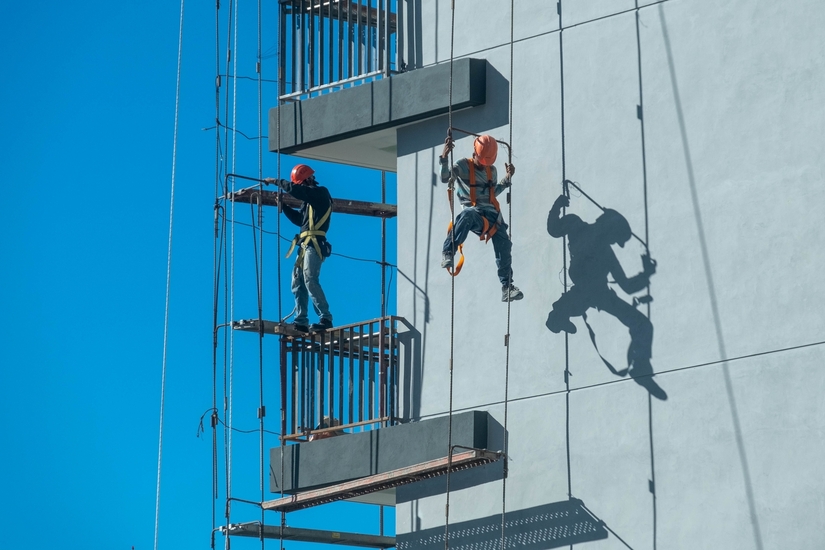
Working at height, not the most exciting part of site management, and rightly so, the scrutiny it gets.
Every year in the UK, falls from height are still among the most common causes of serious and fatal injuries on construction sites, and that’s a grim fact.
The Work at Height Regulations 2005 were brought in to try and prevent those sorts of accidents and to clearly define where a site manager’s responsibilities kick in and where they stop.
Now, on real sites, compliance isn’t always as straightforward as it looks when you’re checking boxes on a form.
The paperwork tells one story, but the state of the scaffolding, the mews, and the roof ladders can paint a different picture entirely.
This isn’t just a dry rundown of the regulations, it’s a practical guide that turns the rules into day-to-day site reality.
Making Sense Of The Work At Height Regulations 2005
These regs apply to any job where someone could potentially take a tumble and get hurt, whether that’s a couple of metres up or twenty, or anywhere in between.
The ‘height’ bit isn’t just about the distance from the ground, it’s about the level of risk. So, things like changing a light on a stairwell are right up there with installing roof tiles as far as the regulations are concerned.
The end goal of the law is simple enough:
You try to stop people from falling in the first place, and when that’s not possible, you do your best to make sure they don’t get hurt if they do fall.
The regulations boil down to three key tasks for site managers:
- Where you can realistically avoid it, avoid working at height altogether.
- When you can't avoid it, take sensible precautions to stop people from falling.
- In the event of the worst happening, do your best to minimize the impact.
It’s all just good sense, but it’s the detail and how it all gets put into practice that’s the tricky bit.
The Site’s Manager Legal Role
Under the regulations, site managers and employers have a duty of care responsibility to ensure that:
- Good work at height is carried out with a proper plan, close supervision, and all the right safety measures in place.
- You're putting workers who are properly trained and up to the task on the job, and familiar with the equipment they'll be using.
- The gear is properly looked after, daily inspections & regular maintenance are a must.
- The weather is suitable for the work at hand, you wouldn't send someone out to paint in a monsoon, would you?
In reality, that means your clipboard and your site walkaround are two sides of the same coin. You don’t build a safe site on just paperwork, it’s built on habits that become second nature.
Step 1: Risk Assessment
Before one single person even thinks about climbing up, a good, thorough risk assessment has to be done, and it’s not just a matter of ticking boxes.
It’s a case of asking yourself, is there a safer way of getting this done? or:
- Can the job be done from the ground if you use the right sort of tools?
- If that's not possible, is there safe access equipment, like scaffolding or a MEWP, that you can use?
- Are you dealing with fragile surfaces, open edges, or any walls that look a bit dodgy?
If a building looks even remotely unstable, stop dead. You can’t afford to take a chance on a collapsing roof or a wall that’s going to come crashing down, especially when it’s all so avoidable.
For tips on spotting when a building might be structurally unstable, have a look at that piece that shows you what to look out for.
Take note of your findings and keep an eye on them, especially if the site conditions change mid-project.
Step 2: Planning The Work (And The “What Ifs”)
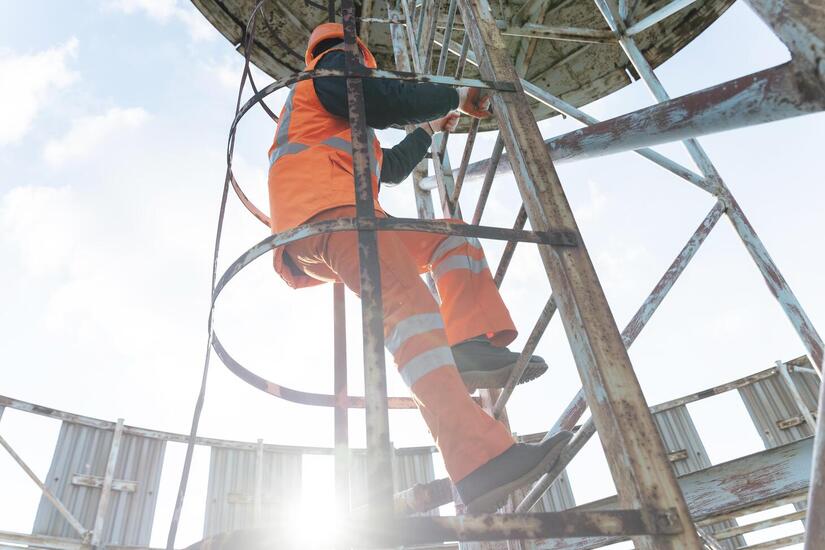
Once you’ve confirmed the work needs to be done at height, planning becomes everything.
A solid plan covers:
- The sequence of work and equipment needed.
- Access and egress routes for workers.
- Weather contingencies, no roofing or scaffolding in high winds or rain.
- Emergency procedures, including rescue plans.
A rescue plan isn’t optional. The HSE expects every site to have one that’s specific to the job. That means not just “call 999,” but knowing exactly who does what and how they’ll do it.
Step 3: Choosing The Right Access Equipment
The right gear depends on the job, duration, and environment. Site managers should assess equipment options in this order of priority:
- Avoid working at height if possible.
- Use collective protection, guardrails, scaffolds, and podium steps.
- Use personal protection, harnesses, and fall arrest systems.
Here’s a quick sanity check for common scenarios:
- Scaffolds : Always built or altered by trained personnel (CISRS-qualified). Weekly inspections are mandatory under Regulation 12.
- Towers : Must comply with PASMA standards; never built beyond manufacturer limits.
- Ladders : Only for short, light work where no safer method exists.
- MEWPs : Require IPAF-trained operators and ground-level supervision.
If you’ve ever walked a site and seen a labourer leaning out from a ladder with one hand, you already know what non-compliance looks like.
Step 4: Training And Competence
No piece of PPE or scaffold will compensate for a lack of competence.
The law states clearly that anyone involved in work at height must be competent or under direct supervision by someone who is.
Competence means the right mix of training, knowledge, and experience.
Site managers should verify that:
- Training certificates (like PASMA, IPAF, or CISRS) are valid and up to date.
- Refresher sessions are scheduled for long-term staff.
- Toolbox talks are held regularly, especially before high-risk tasks.
If you’re unsure how to refresh safety culture on site, this quick set of workplace health and safety tips can help get the basics right again.
Step 5: Equipment Inspection And Maintenance
The regulations require regular inspection of all access equipment. But frequency depends on usage:
- Scaffolds : Every seven days and after severe weather.
- Ladders : Every three to six months, or more often if heavily used.
- Harnesses and lanyards : Every six months, formally logged.
Keep inspection records onsite. The HSE will ask for them first after any incident.
Also, store gear properly. UV damage, frayed ropes, and corroded metal fittings can turn reliable PPE into a liability.
Step 6: Weather And Site Conditions
The UK weather has no respect for risk assessments. Wind, rain, and frost all change the stability of scaffolds and surfaces.
Site managers should check conditions daily before authorising any work at height. If the site involves roofs, tarps, or temporary walkways, one gust is all it takes to cause a fall.
Train supervisors to call time on unsafe conditions. No deadline or client pressure outweighs a worker’s life.
Step 7: Emergency And Rescue Planning
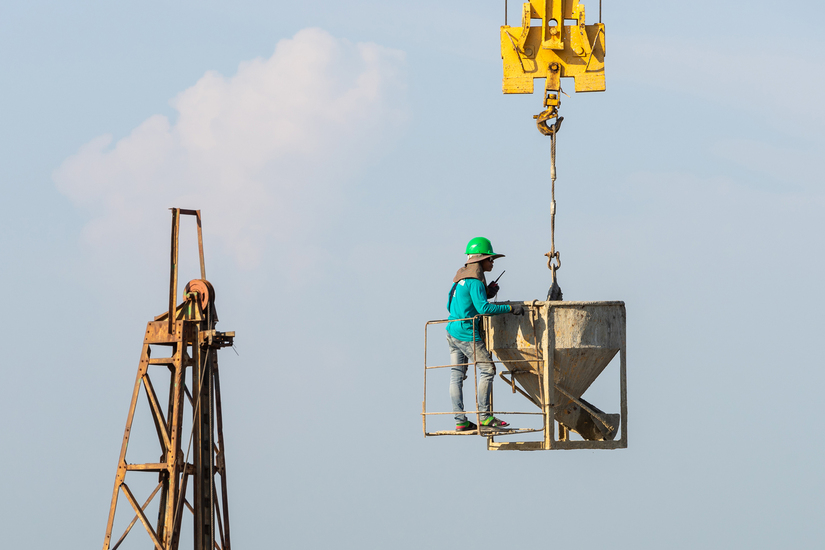
A proper rescue plan answers:
- How will the worker be retrieved safely?
- Who’s trained in rescue techniques?
- Is rescue equipment accessible and inspected?
If a worker falls into a harness and hangs suspended, shock sets in quickly. Standard first-aid isn’t enough; specific rescue drills are required.
Plan for this from day one. Don’t assume the fire service can handle it in time, the HSE is clear that you are responsible for immediate rescue capability.
Step 8: Communication And Supervision
Even well-drafted safety systems collapse without clear communication. Supervisors need to understand not just what to do, but why.
Regular safety briefings, visible signage, and open reporting channels all help reduce complacency. Encourage near-miss reporting, those small slips often predict the big ones.
A good site manager doesn’t just check boxes; they build awareness.
Step 9: Record Keeping And Documentation
Documentation isn’t bureaucracy, it’s your defence and your proof of diligence. Keep organised records of:
- Risk assessments and method statements (RAMS).
- Training certificates and inductions.
- Scaffold and equipment inspection logs.
- Weather-related stoppages and incident reports.
Digital systems or shared drives make this easier than paper folders in a damp cabin. But either way, consistency matters.
Common Compliance Gaps That Fail Inspections
Every experienced site manager has seen one or more of these slip through:
- Ladders are used as working platforms.
- Missing scaffold handrails on end bays.
- Incomplete rescue plans.
- Damaged harnesses are still in use.
- Inadequate supervision of subcontractors.
These are the things HSE inspectors pick up on instantly. And under Regulation 10, failure to plan and manage work at height properly is a prosecutable offence.
Culture Over Compliance
Real compliance isn’t about paperwork; it’s about culture. The safest sites are the ones where workers genuinely look out for each other, and where managers lead by example.
Encourage your teams to speak up. If something looks off, it probably is. A few extra minutes to reassess can prevent an accident that changes lives.
Building that mindset takes time, but it’s the difference between reacting to incidents and preventing them entirely.
The Role Of Technology And Training
Modern safety management isn’t all hard hats and clipboards anymore. Tools like Tradefox are changing how trades and managers learn, letting them simulate complex, high-risk situations in a controlled, zero-danger environment.
From harness checks to structural load scenarios, it gives site teams the confidence to make safer calls before stepping onto real scaffolds.
Final Words
The Work at Height Regulations 2005 aren’t red tape, they’re a lifeline. They were written from hard lessons and real losses.
Site managers are the bridge between policy and practice, and every safe shift starts with the choices they make before anyone climbs a ladder.
Do the basics right: assess, plan, train, inspect, and review. And remember, a compliant site isn’t just one that passes inspection, it’s one where everyone goes home safe.