
If you’ve ever stood in a garden centre staring at boxes labelled IP44, IP65, or something even more cryptic and thought, “Why is this suddenly a math equation?” you’re not alone.
Outdoor lighting is one of those areas where people think they understand the rules until water gets involved. And UK weather? It tests everything. Relentlessly.
So let’s clear the fog. Here’s the direct answer most homeowners don’t get upfront:
For most UK gardens, IP44 is fine for covered areas, but if the light is exposed to rain, direct jets of water, or sits low to the ground, you want IP65.
Not fancy. Not overkill. Just safe, durable, and compliant with actual UK installation conditions.
This guide breaks down how the IP rating system works, where each rating belongs, and how to avoid the surprisingly common mistakes that lead to failures or unsafe setups.
How IP Ratings Actually Work?
An IP rating is simply a two-digit code:
- The first digit = protection against solids (dust, insects, debris).
- The second digit = protection against water.
The second digit, the water rating, is everything for UK gardens.
Common outdoor ratings you’ll come across:
| Rating | Water Protection Level | Real-World Meaning |
|---|---|---|
| IP44 | Splash Resistant | Fine under soffits, porches, sheltered walls |
| IP54 | Better Splash Resistance | Light rain exposed areas |
| IP65 | Jet-Resistant | Fully exposed outdoors, rain, hose, wind-driven storm soakings |
| IP67 | Temporary Submersion | Ponds, decking uplights, and ground fixtures |
| IP68 | Permanent Submersion | Ponds / Fountains, long-term |
Notice something?
There’s no one-size-fits-all.
Someone installing a gentle wall light under a canopy doesn’t need the same level of protection as someone placing spike lights into damp flower beds. That’s why picking the right rating starts with understanding the location, not the marketing claims.
Choosing The Right IP Rating Based On Location In A UK Garden
This is where things start to fall into place for most people:
The more exposed to the elements the light is, the higher the IP rating required.
Lights Under A Covered Area
Think porches, verandas, soffits, or a covered-up decking area.
- In these situations, the light is rarely going to cop a direct hit from the rain.
- You might get a bit of splash exposure, but that's about it.
Most installers will get by just fine with IP44 or IP54 without any issues. The light will be durable and not start fogging up or fail after the first storm.
Wall Lights Exposed To Rain
Now, this is the thing that gets people into trouble the most, people often don’t think about it this way.
Even though the light is on a wall, wind-blown rain can still manage to get in and push water into the fixture if it’s not properly sealed.
This is the point where you start to think that IP65 is a good place to start looking for when it comes to your light choice.
And yeah, a lot of reputable electricians in the UK have essentially given up on installing IP44 lights in these situations because the call-backs from blown transformers or corroded terminals are just too common.
Spike Lights, Bollards & Ground Fixtures
Anything at ground level is going to get a bit of a rough time.
- Splash back from puddles
- Moisture from the soil
- Rising damp
- Debris from the yard
- The occasional hosepipe
These lights have it pretty tough, and you’ll need at least IP65 to keep them running – some pros will even go for IP67 to give them some extra protection against heavy downpours or poor drainage.
Pond, Water Feature & Decking-Recessed Lights
These lights need to be pretty water resistant, we’re talking full submersion, pretty much.
- IP67: submersion for a little while
- IP68: submersion all the time
If it’s going to be in contact with water regularly, then forget about IP44 and IP65 – they’re just not going to cut it.
Why UK Weather Makes The IP Rating Even More Important
UK gardens don’t just get wet, they get absolutely drenched, frozen, thawed, battered with torrential rain, and blasted with condensation cycles that can wreck cheap fixtures.
Three things more likely than anything else to wreck your outdoor lights are:
- Heavy rain is seeping in through weak seals because of the wind
- Condensation is forming up inside the fitting and doing its worst
- Freeze-thaw cycles force that water inside to expand and make a mess of things
This is why pros give a groan when people grab some “bargain” fixtures without a proper IP rating, because the moment water gets into the wiring, it’s not just a nuisance. It can be a genuine safety risk.
IP44 vs IP65: What's The Real Difference That Actually Matters?
Loads of folks ask: “Is it worth dishing out a bit extra for IP65? “
Here’s the real lowdown from installers :
- IP44 is splashproof, for a bit, anyway.
- IP65 is sealed up tighter than a tank.
In other words:
IP44 means it’ll be fine if there’s just a bit of water about.
IP65 means it can withstand being soaked to the hilt
And because “outdoors” basically means “water is going to be everywhere”, you’ll often see pros just going for IP65 if it’s not going in a sheltered place.
Think about buying winter boots for a second:
IP44 is like wearing trainers in the rain, it seems fine at first, but it won’t last long
IP65 is like proper waterproof boots, no worries about puddles or wet grass, you can just get on with it.
The Unspoken Problem With Cheap Outdoor Lights
There are thousands of these lights online that claim to be “IP65” but don’t actually deliver.
You’ll see all the following screw-ups:
- Water spots are forming inside that glass dome because it's not actually sealed properly
- Rust is starting to form on those screws within a few months because they were basically just chromed over
- Fittings are falling apart after a while because of UV ruining the plastic
- Seals are degrading faster than expected because they were put in a hurry and just weren't good enough
- Cable glands that don't actually seal the cable because they can't be bothered to do it right
A proper outdoor light should feel weighty, use thick rubber gaskets, and have a genuine seal around the cable entry, not a tiny plastic collar pretending to prevent water ingress.
Quick Match: Where Each Rating Belongs
- IP44 → sheltered porches, soffits, covered walls
- IP54 → semi-sheltered walls
- IP65 → exposed walls, fences, patios, spike lights
- IP67 → decking uplights, heavy splash zones
- IP68 → underwater pond lights
Simple and usable.
Installing Outdoor Lights: Safety Notes Most Homeowners Miss
Outdoor Lighting always interacts with the following:
- Water (because, well, it's outside)
- Electricity (as in, the power that makes it all work)
- And Earth connections (the ground that keeps you from getting a shock)
Three things that don’t forgive mistakes.
Even if someone buys a top-of-the-line IP65 fixture, it’s how it’s installed that will determine whether it actually behaves like one or not (something to keep in mind).
A Few Critical Points:
-
Cable entry must face downwards
That stops water from running along the cable and straight into the fitting. -
All outdoor cables should be rated properly (think better than the cheap indoor stuff)
That would be rubber flex or armoured cable, not some flimsy PVC indoor cable that gets all brittle and dodgy when it's outside. -
Use the proper outdoor junction boxes
If that connector fails, then all the waterproofing in the world is for nothing.
Common Misconceptions About IP Ratings (Time To Bust Some Myths)
Time for your second bullet-point section. Some myths need killing, and we’re here to do just that:
-
Myth: "Higher IP ratings are always better."
Reality: Well, not necessarily, a wall light with an IP68 rating is just a costly exercise in over-engineering. -
Myth: "IP44 works everywhere outdoors"
Reality: Unfortunately, no. Rain and splash are two very different things. -
Myth: "Any product with an IP rating is guaranteed waterproof."
Reality: The quality of the manufacturing matters far more than just getting that certification. -
Myth: "Lights fogging up is normal."
Reality: Actually, it's usually a sign that the sealing is poor or there's moisture getting in.
How To Choose IP Ratings For Smart Lighting, PIRs & Timers
Modern garden setups are getting more and more complex
- They often include PIR motion sensors
- Smart WiFi controllers
- Integrated LEDs
- Smart switches or transformers
All these components have their own IP ratings, which can be a real challenge to get right
For example:
- Your smart hub probably only goes up to IP20, so keep it indoors
- An outdoor PIR will usually need to be IP65
- Smart spotlights vary between IP44 and IP66
- If a device has any electronics or a removable cover, then the IP rating becomes even more critical, as it can be super sensitive to moisture.
Simple Rules Electricians Actually Use
- If it’s exposed, choose IP65
- If it’s near the ground, choose IP67
- If it’s underwater, choose IP68
- If it’s fully sheltered, IP44 is fine
- When in doubt → go one level higher
These simple heuristics solve 95% of bad installations.
When To Call A Professional Instead Of DIY
Outdoor electrical work is not like changing a ceiling bulb indoors.
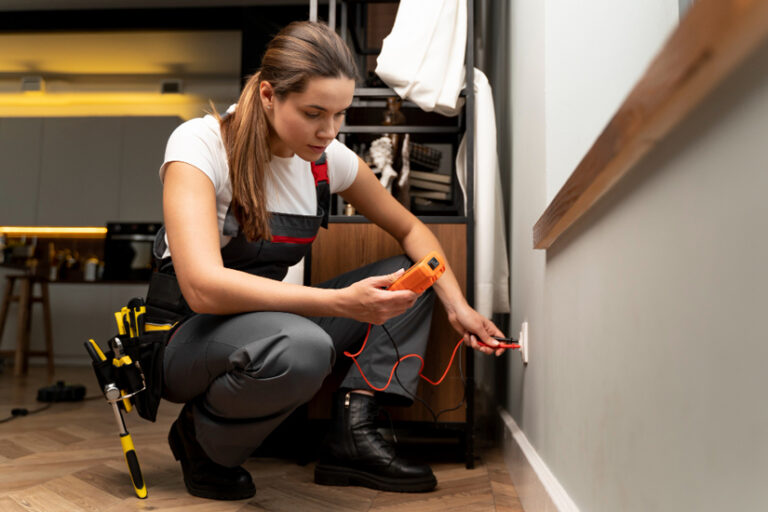
Between RCD protection requirements, safe cable routing, proper glands, and zoning rules around ponds and water features, there are cases where a professional is simply the only safe option.
Quality installation often extends the lifespan of outdoor lighting more than the IP rating itself.
Where Trade Professionals Train & Test Install Scenarios Safely
Before wrapping up, it’s worth highlighting tools that tradespeople use today to sharpen their real-world skills without risky mistakes. Tradefox is a simulation platform designed for UK electricians, plumbers, and other trades.
It allows people to practise problem-solving scenarios, including outdoor electrical setups, without the danger of real-world hazards. It’s become particularly useful for trainees and new installers wanting to build confidence fast.
Bottom Line
Choosing the right IP rating isn’t complicated once the environment is understood. Sheltered areas get IP44; exposed areas need IP65; ground fixtures go higher.
Quality matters more than marketing labels, and UK weather demands outdoor lights that can handle genuine rain exposure, not theoretical splash tests.
A little care when selecting and installing saves a lot of hassle later on.