

Walk past any urban construction site in the UK today and you’ll see architecture in flux. Steel frames rising beside Victorian terraces.
Timber pods craned into place next to concrete giants. It’s a strange and fascinating blend, a visible reflection of how modern construction is evolving in real time.
Understanding building construction types isn’t just for architects or engineers. It’s crucial for developers, tradespeople, investors, and even tenants.
After all, how a building is put together affects everything: safety, speed, energy performance, and even how long it’ll stand.
So, let’s unpack what modern construction looks like in the UK today, how we build, what we build with, and why it all matters more than ever.
What Defines A Construction Type?
At its core, a building’s construction type refers to the structural system, how it bears loads, what materials it uses, and how those materials come together. Sounds straightforward. But in practice, it’s anything but.
In the UK, there’s often a crossover between traditional methods and newer innovations. You’ve got heritage stonework sitting metres away from modular student flats.
The choice of construction type influences everything from architectural freedom to insurance premiums. It’s the skeleton, the muscles, and, depending on the build, the life expectancy of the entire structure.
There’s also regulation to think about. Fire safety, structural loading, and acoustic performance all of it links back to what method you use. Especially in a post-Grenfell landscape, the scrutiny is sharper. Aesthetic choices are no longer made in isolation from the technical bones beneath.
Traditional Methods Still Holding Ground
Let’s not forget, much of the UK’s built environment is still deeply rooted in traditional construction methods. While modern architecture leans toward steel and glass, many structures are still going up with time-tested approaches.
Masonry Construction
Bricks and mortar, arguably the oldest and most British of all.
From solid wall Georgian terraces to modern cavity wall setups, masonry construction is still widely used, particularly for low-rise housing. It’s labour-intensive, sure.
But it’s familiar, reliable, and locally sourced in many cases. And let’s be honest, there’s still something comforting about a red-brick home.
Timber Frame
It’s not just for cottages anymore. Timber frame construction has re-emerged in new builds thanks to its lower carbon footprint and quick installation. Think pre-fabricated panels, craned in and bolted together on-site. You’ll see it especially in Scotland, where around 85% of new homes use timber framing.
Steel Frame (Pre-1980s)
Long before we got fancy with hybrid systems, steel frames were the go-to for industrial and commercial buildings.
Many of these structures are still standing strong today. They’re tough, flexible, and easier to adapt, though they’re rarely used alone in residential projects now.
Traditional methods come with charm and longevity. But they’re not always fit for the future, especially when speed, sustainability, and labour shortages enter the equation.
Welcome To The Modern Era: Steel, Concrete & Cross-Laminated Timber
So, what’s the current playbook? Let’s talk materials.
Steel Frame Construction
Still a favourite for commercial projects, retail parks, and large-scale industrial units. Why? It’s quick, strong, and allows for big open internal spans.
Office towers and multi-storey car parks lean heavily on steel skeletons. It’s efficient, but insulation and fireproofing need serious attention to get it up to spec.
Reinforced Concrete Frame
A staple in UK hospitals, universities, and mid- to high-rise flats. Reinforced concrete allows excellent load-bearing and design flexibility, but it’s got a heavy carbon footprint.
Still, for certain projects, there’s no real alternative. Its thermal mass can be a bonus in temperature regulation, if detailed correctly.
Cross-Laminated Timber (CLT)
Here’s the rising star. Think of CLT as giant wooden Lego blocks, engineered timber panels layered at right angles and bonded under pressure.
The result? Strong, lightweight, and astonishingly sustainable. You’ll find it in schools, flats, and even commercial offices now.
It’s particularly useful in constrained urban sites thanks to minimal on-site waste and faster build times.
Hybrid Systems
These are becoming increasingly common. Steel frame with concrete floors. CLT walls within a steel cage. It’s about playing to each material’s strengths, speed, sustainability, and cost. You don’t always need to commit to just one method. Sometimes the smartest builds are the ones that mix and match.
Modular & Off-Site Construction: Changing the Game
Let’s clear something up, modular doesn’t mean “cheap and cheerful”. Not anymore.
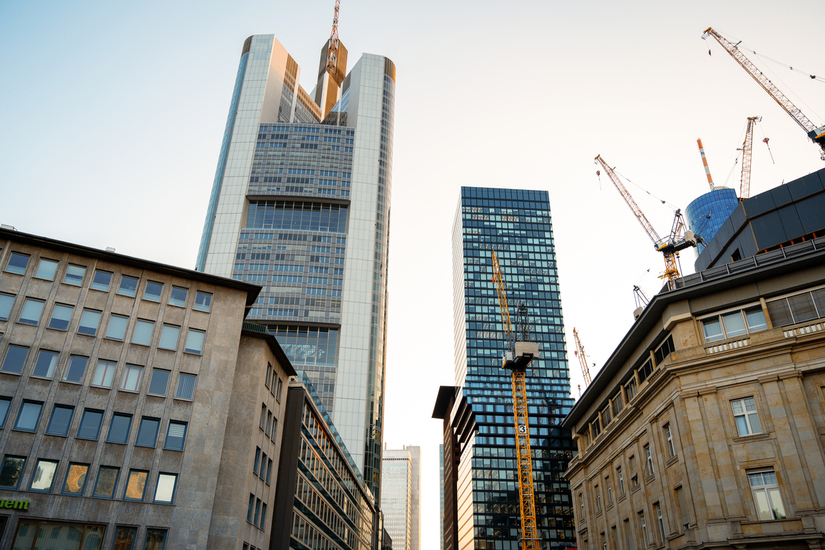
Off-site construction, including modular and volumetric methods, is gaining serious traction in the UK. Entire rooms, walls, plumbing, wiring, built in a factory, then delivered and stacked like giant building blocks on-site. It’s a game-changer for speed and safety.
Consider projects by developers like Tide Construction. Their modular towers in London have made headlines not just for height, but for delivery speed.
What normally takes two years can be completed in 12 months. That’s not just impressive, it’s revolutionary in areas with high housing demand.
There are challenges, of course. Transporting large modules through city streets isn’t simple.
Planning authorities can be slow to approve newer methods. And there’s still a perception hurdle to clear, some clients associate modular with budget builds or temporary structures. But that’s changing fast.
Off-site doesn’t mean off-quality. In many cases, it’s the opposite.
Fire Ratings, Structure & Building Regulations
Let’s talk about compliance.
In the UK, all construction types must meet the requirements laid out in the Building Regulations, particularly Part A (Structure) and Part B (Fire Safety). But the way those requirements are achieved varies widely based on the chosen method.
For example, CLT is celebrated for sustainability, but its fire performance requires special consideration.
While charring layers can slow fire spread, buildings still need protected escape routes, robust detection systems, and sometimes even additional fire-resistant linings.
Steel, on the other hand, can lose strength quickly in high heat. It needs to be encased or coated to meet fire resistance standards.
Concrete fares better under heat but presents its challenges in terms of early-stage moisture and cracking.
Since the Grenfell Tower disaster, fire safety has become more than a checkbox, it’s a public concern, a media topic, and rightly, a major design priority.
The materials chosen and the way they’re assembled must withstand not just physical stress, but regulatory and reputational scrutiny.
Insurance providers have followed suit. Buildings made of “non-standard” materials may attract higher premiums unless they’re demonstrably safe and compliant.
That’s where proper detailing, certification, and fire testing matter as much as the materials themselves.
Construction Type & Sustainability
Energy efficiency and carbon footprint aren’t just buzzwords anymore, they’re key project metrics.
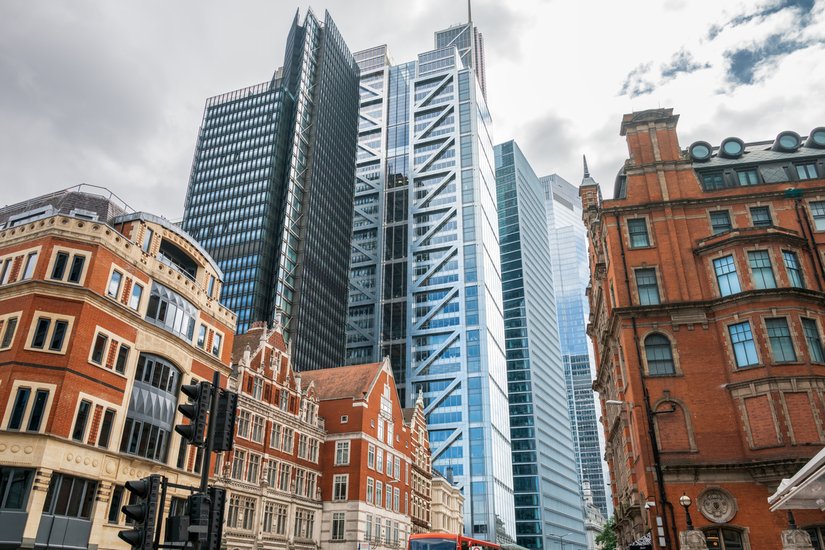
Construction types play a massive role here. Timber-based systems (like CLT or timber frame) naturally store carbon and typically offer better insulation. That’s why they’re heavily used in low-energy design frameworks like Passivhaus.
Even blockwork has come a long way. Aerated concrete blocks, for instance, are lightweight and thermally efficient.
Hempcrete, yes, made from actual hemp, is being used in some niche projects for its remarkable insulation and environmental credentials.
There’s also a growing emphasis on embodied carbon, the emissions involved in producing, transporting, and assembling materials.
The Royal Institution of Chartered Surveyors (RICS) is pushing for whole life carbon assessments as standard practice.
Put simply, it’s not just about how a building performs once it’s finished. It’s about how it got there in the first place.
Choosing The Right Construction Type: No One-Size-Fits-All
So, what drives the decision?
- Site conditions – Is the soil stable? Is there access for cranes or lorries?
- Budget and timeline – Can you afford the slower pace of traditional masonry? Or is modular the answer to tight delivery dates?
- Planning constraints – Some local authorities are pickier than others.
- Building use – A school has different acoustic and safety needs compared to a warehouse.
- Future adaptability – Will the building need to change use in 10 years?
Every method has trade-offs. And often, the best solution is the one that balances them, not one that eliminates them all.
Building Skills For Building Smarter
Before we wrap up, here’s something worth knowing: the success of any construction type also depends on the people building it. No matter how innovative the method, poor execution leads to costly rework and potential danger.
That’s why platforms like Tradefox are making waves. It’s a training simulation app built for tradespeople, plumbers, electricians, and joiners, allowing them to sharpen skills in a risk-free, virtual environment.
Whether it’s wiring a board or fitting a soil pipe, users get hands-on experience without ever stepping on-site. Smart, safe, and surprisingly engaging.
Tools like this are essential in a world where construction methods are diversifying rapidly. Skilled labour needs to keep pace with evolving techniques, and platforms like Tradefox help close that gap.
Bottom Line
Shortly, expect to see more hybrid systems, more prefabrication, and an even sharper focus on carbon reduction.
As building tech evolves, construction types will get more complex, but also more efficient. The key isn’t picking a side between traditional and modern. It’s knowing when each one fits.
Modern architecture doesn’t mean abandoning old methods. It means building smarter, with an open mind, a tighter brief, and a better set of tools.