
In the world of electrical systems, few things are as dangerous and misunderstood as an arc flash. It’s not just a bright flash or loud pop.
It’s a type of electrical explosion that can rip through a panel in milliseconds, releasing energy that rivals a small bomb.
Imagine intense heat exceeding 20,000°C, pressure waves that knock people off ladders, and molten metal flying through the air. That’s what happens in an arc flash event.
And here’s the thing: many of these incidents are preventable. But they’re often overlooked until someone gets burned, literally.
Whether you’re dealing with high-voltage switchgear or low-voltage distribution boards, understanding arc flash hazards isn’t optional.
It’s fundamental to electrical safety. Especially for those working on or near energized electric equipment. This guide unpacks where arc flashes come from, what they do, and most importantly, how to stop them before they start.
What Causes An Arc Flash?
Arc flashes don’t happen out of nowhere. There’s always a trigger. And in many cases, it’s frustratingly avoidable.
Start with the most common culprit: human error. A screwdriver slips. A panel cover gets removed without checking voltage.
Someone forgets to de-energize a circuit before maintenance. Just like that, the risk of arc flash skyrockets.
Then there’s equipment failure. Circuit breakers that haven’t been tested in years. Loose connections inside aged switchgear. Deteriorating insulation. All of it can create conditions ripe for an arc fault.
Another sneaky contributor? Dust, moisture, or vermin inside panels. They bridge the gap between conductors and boom, you’ve got an electric arc.
What catches people off guard is that arc flashes aren’t exclusive to high-voltage setups. They happen in 240V panels too.
Don’t let “low voltage” fool you. The energy released depends on current and duration, not just voltage.
When conditions line up, say, high fault current and slow breaker clearing, you’ve got the perfect storm.
And once that arc forms, it feeds itself. The hotter it gets, the more conductive the air becomes. Until the whole system basically becomes a blowtorch.
It doesn’t take much. One wrong move and the chain reaction is already underway.
The Fallout: How Bad Is an Arc Flash Incident?
Short answer? Catastrophic. The aftermath of an arc flash can include third-degree burns, collapsed lungs, ruptured eardrums, or worse.
The intense heat vaporizes metal on contact, turning copper conductors into plasma instantly.
That plasma expands, creating a supersonic pressure wave, known as the arc blast. It’s loud enough to cause permanent hearing damage, even with protection.
People closest to the flash often suffer thermal burns and flying shrapnel injuries. But the damage doesn’t stop at the body.
The electric equipment takes a hit too. Arc flashes melt busbars, destroy switchboards, and trigger fires that spread far beyond the point of origin.
Then there’s the downtime. After an arc flash event, operations grind to a halt. Investigations begin. Replacements are ordered.
Insurers get involved. The business disruption alone can stretch into six figures. Not counting the legal aftermath if it’s proven that the employer skimped on risk mitigation.
And let’s not forget the emotional impact. One arc flash incident is enough to shake a workforce’s confidence.
Word spreads quickly. People become hesitant to work and live. Trust in procedures dips. Safety culture takes a hit.
No exaggeration, arc flash hazards can break a business if left unchecked.
Legal Duties In The UK: What’s The Law Say?
In the UK, employers are legally bound to keep workers safe from electrical hazards, including arc flashes. It’s not a grey area. The Health and Safety Executive (HSE) enforces this with real bite.
Under the Electricity at Work Regulations 1989, any electric equipment must be maintained in a condition that prevents danger. That includes guarding against arc fault scenarios and ensuring systems are safe to use.
The Management of Health and Safety at Work Regulations 1999 go further. It demands risk assessments for all foreseeable dangers. Yes, arc flash counts.
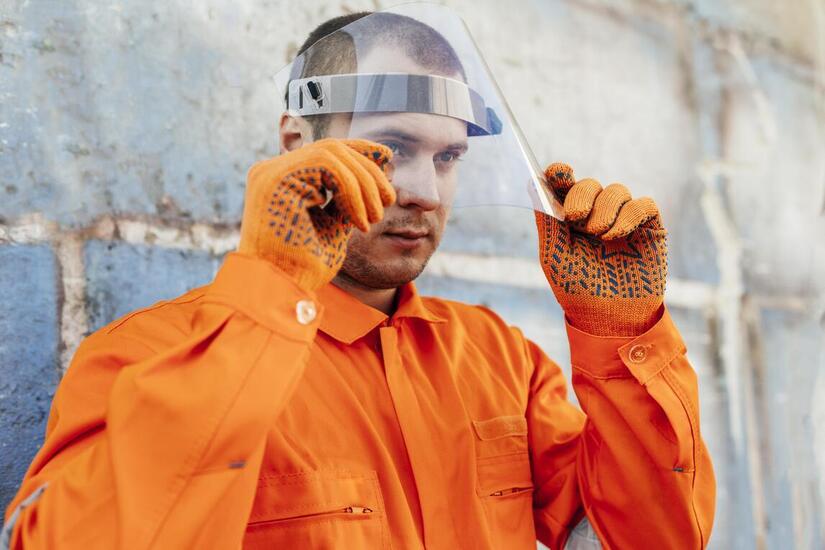
And then there’s PPE. Thanks to the Personal Protective Equipment at Work Regulations 2022, employers must provide appropriate personal protective equipment (PPE) at no cost to workers and ensure it’s suitable for the level of risk.
The legal bar is high. You can’t just say, “We didn’t think that would happen.” Ignorance isn’t a defence.
Failing to protect staff from an arc flash incident can land employers in court. Fines, prison terms, corporate liability, you name it.
But beyond penalties, there’s the reputational damage. Once word gets out that a preventable arc flash happened on your site, good luck winning the next contract.
Bottom line? Legal compliance isn’t optional. It’s the bare minimum.
How To Tackle Arc Flash Risks The Smart Way
Let’s talk about strategy. Managing the risk of arc flash starts with one thing: a solid arc flash risk assessment.
This isn’t your run-of-the-mill checklist. It needs to consider fault current levels, clearing times, working distances, and how likely it is that someone will work live. That last one? Usually higher than people think.
You also want to evaluate the energy released in the event of a fault, measured in cal/cm². That tells you what PPE is needed and how bad a potential arc flash could get.
NFPA 70E is a solid resource, even though it’s a US standard. In practice, many UK firms follow its guidance for calculating incident energy and labelling equipment. Makes life easier.
Once you’ve assessed the risks, start implementing engineering controls: arc-resistant switchgear, remote racking, fast-acting circuit breakers. Then come administrative controls: clear signage, isolation procedures, permits to work.
You’re not done yet. The gear matters too. Arc-rated clothing, face shields, balaclavas, gloves, all part of the puzzle. But more on that in a moment.
And don’t let the assessment gather dust. It needs updating regularly, especially after system changes or near misses. That’s where things often fall through the cracks.
Engineering Controls That Actually Work
If prevention’s the goal, engineering controls are the backbone. You can’t always control human error, but you can design systems that reduce its impact.
Start with arc-resistant switchgear. These enclosures direct the energy released during an arc flash upward and away from the operator. Expensive? Sure. Worth it? Every time.
Then there’s remote racking. Instead of standing inches from a live panel, workers use handheld remotes or HMI systems to engage or disengage circuit breakers from a safe distance. It’s like giving them a 20-foot buffer.
Zone-selective interlocking is another trick. It lets upstream breakers communicate with downstream ones, reducing clearing time and limiting the energy released. Less energy = lower injury potential.
Other bits that help: maintenance-free bus systems, insulated tools, and installing current-limiting fuses in high-risk circuits.
And of course, don’t overlook testing and documentation. You’d be surprised how many sites have single-line diagrams that haven’t been updated since dial-up internet was a thing.
All of this requires investment. But compare that to the cost of equipment damage, hospital stays, or regulatory fines. The maths is simple.
Smart systems make dumb mistakes less deadly.
Safe Work Practices That Stick

No one likes policies for the sake of policies. But when it comes to arc flash hazards, clear rules save lives.
It starts with training. Not a one-off induction. Ongoing sessions. Toolbox talks. Live demos. People need to know what an arc flash is, what triggers it, and how to avoid it.
Then, get serious about lockout/tagout (LOTO). UK sites often treat this like a suggestion. It’s not. De-energising before maintenance should be standard.
Use labels. Proper ones. With incident energy, boundaries, and required PPE listed. They’re not just stickers, they’re guides for survival.
Implement a permit-to-work system for live jobs. Make it deliberate. A second set of eyes can catch what someone in a rush might miss.
Lastly, keep documentation tight. If something goes wrong, you’ll want to prove you followed best practice. If you didn’t? That paper trail (or lack of one) might haunt you in court.
It’s about habits. Good ones keep people alive. Bad ones don’t get a second chance.
Dress For The Blast: PPE That’s Fit For Purpose
Let’s cut to it. If there’s a chance of exposure to an arc flash, regular workwear won’t cut it. You need personal protective equipment (PPE) that’s designed for the job.
We’re talking arc-rated gear. Not just flame-resistant (FR), that’s the base layer. Arc-rated PPE includes:
- Multi-layered arc flash suits
- Balaclavas and hoods
- Balaclavas and hoods
- Face shields with chin protection
- Insulated gloves and boots
- Hearing protection
Each piece plays a part. Together, they can be the difference between walking away with a scare and not walking away at all.
The rating matters too. Arc flash PPE is rated in cal/cm², and it must match the energy potential of the task. Overkill is fine. Under-protection is not.
A common mistake? Wearing synthetic underlayers beneath arc gear. In an arc flash, they melt to the skin. Always go with natural fibres underneath.
And check your gear. Regularly. A cracked visor or damaged suit loses its integrity fast. PPE isn’t a ‘set it and forget it’ situation.
When the heat hits, gear that fits, functions, and protects is your last line of defence.
Competency Comes From Practice
Knowing the rules is one thing. Being ready when the breaker arcs is another. Competency comes from repetition, not just reading procedures.
Electricians, apprentices, maintenance crews, they all need regular refreshers. Not just on the theory, but the hands-on stuff. How to isolate. How to check voltage. How to respond if someone gets hit.
Supervisors play a big role too. Their job isn’t just to enforce rules, it’s to model them. When senior staff cut corners, others follow. Culture flows from the top.
And here’s a game-changer: simulations. Practice doesn’t have to mean risk. Tools like Tradefox offer trade professionals a safe way to sharpen their instincts.
It’s especially useful for electricians and plumbers wanting to train for high-risk situations without endangering themselves or others.
When the pressure’s on, you don’t rise to the occasion, you fall to your level of training. Better make sure that level’s high.
Building A Culture That Respects The Danger
Arc flash hazards won’t go away. The goal isn’t eliminating risk, it’s managing it wisely.
Creating a strong safety culture means more than compliance. It means leadership that invests in training. Teams that look out for each other. A mindset that sees PPE as essential, not optional.
The best setups combine engineering, policy, and people. No single fix solves it. It’s the overlap that keeps workers safe.
And let’s not forget: every arc flash incident that doesn’t happen? That’s a win you won’t see in the headlines, but your crew will feel it.
Take the risk seriously. Take action early. Stay sharp.