
Flick a switch, and the light comes on. Plug in the kettle, and it hums to life. In Britain, electricity feels as dependable as the sunrise, there every morning, reliable, invisible.
Yet the National Grid, the web of wires, substations, and power plants that keeps the UK alive, is more fragile than most people realise.
It’s a system that has stood the test of time, but time itself is catching up. Hidden beneath the surface, there are cracks.
The truth is, the grid isn’t just a collection of pylons and cables, it’s the backbone of modern living. From hospitals and trains to the phone in your pocket, everything rests on it.
And that makes any weakness in this silent network far more than a technical issue. It’s a matter of national security, safety, and everyday survival.
What Exactly Is The Grid?
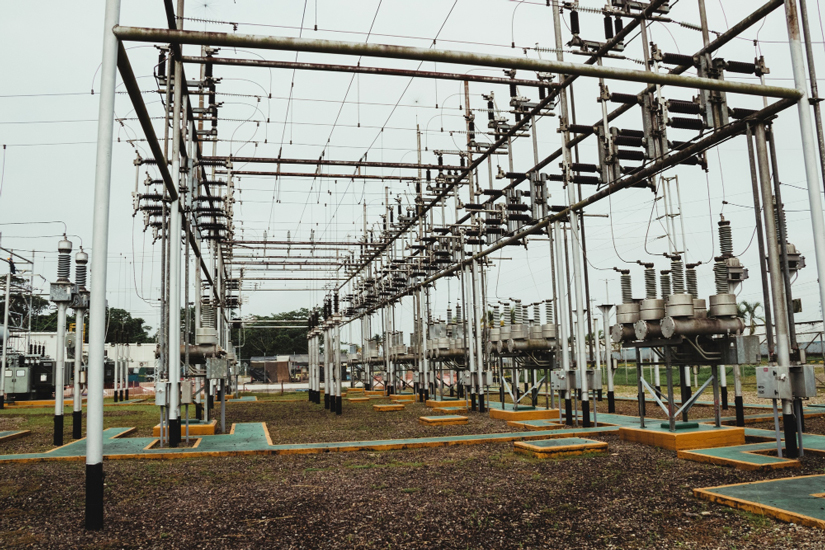
The UK’s grid isn’t one single piece of kit, but a sprawling system. Electricity is generated in power stations, gas, nuclear, wind farms, solar arrays, and fed into high-voltage transmission lines.
These massive overhead cables, the ones striding across fields on steel pylons, carry electricity hundreds of miles before dropping down into local distribution networks. From there, it reaches homes, businesses, and public services.
The operation of this giant balancing act is handled by the National Grid Electricity System Operator (ESO). Their job? Keep supply and demand matched in real time, ensuring the frequency stays bang on 50 Hz. Even a slight wobble can trigger chaos.
Over the past two decades, things have grown more complex. Instead of relying mainly on coal or gas stations, the UK now draws heavily on renewable sources like wind and solar. Cleaner, yes. But more unpredictable. This is where vulnerabilities start to creep in.
Ageing Infrastructure: The Silent Weakness
Much of Britain’s grid was built in the post-war boom, a time when demand was simpler and peaks were predictable, boil the kettle after Coronation Street, switch off the telly at night.
That grid wasn’t designed for millions of EVs charging on driveways, or for the sheer power needs of data centres running the cloud.
Cables buried under roads, substations tucked behind estates, transformers perched in rural fields, many are pushing 50 years old.
Equipment of that age doesn’t just wear down; it becomes less efficient and more prone to failure. One dodgy cable might only knock out a street, but a substation failure can plunge entire towns into darkness.
Upgrades are happening, but not fast enough. The challenge is that the UK grid isn’t just ageing, it’s doing so at the very moment we’re asking more of it than ever.
Cybersecurity Threats: The Digital Achilles Heel
Not long ago, the grid was mostly analogue: switches, dials, and engineers on site.
Now, it’s digital, and that’s both a blessing and a curse. Remote monitoring, automated balancing, and smart meters, these tools make the system more efficient. But they also open new doors for attackers.
Cyberattacks on energy infrastructure have been rising worldwide. In Ukraine, hackers once managed to switch off parts of the power grid remotely.
It’s the sort of incident that sounds like a thriller plot, but it’s real. The UK hasn’t seen an attack on that scale, but the risk is there. Every digital connection, every smart meter, every remote control system is a potential point of entry.
The National Cyber Security Centre works constantly to defend against such risks, but it’s a race that never ends.
As defences improve, so do the tactics of those looking to break through. A single breach could cause blackouts, financial losses, and disruption to essential services like hospitals and transport.
Extreme Weather And Climate Change Pressures
Britain’s weather has always been unpredictable, but climate change is pushing it to new extremes. Heavy storms, heatwaves, and flooding all take their toll on the grid.
Overhead power lines are vulnerable to high winds and falling trees. Substations in low-lying areas face flooding that can knock out thousands of homes in a single hit.
Heatwaves, which are becoming more common, put pressure on transformers and cooling systems. The irony is that when extreme weather strikes, demand often spikes, air conditioning, heating, or emergency responses, just as the grid itself is under strain.
Engineers are working to build resilience, raising substation platforms, burying more cables, and reinforcing pylons. But the pace of climate change means risks are growing faster than fixes.
Supply And Demand Imbalance
Electricity isn’t like water in a tank, you can’t just store vast amounts and draw them off when needed. It has to be generated in real time to match demand.
This balancing act has always been tricky, but renewables have made it more unpredictable.
Wind and solar are fantastic when conditions are right, but the UK has days when the wind barely stirs. What then? Gas-fired stations still act as backup, but with the push towards net zero, these are being phased out.
The balancing act is delicate. If demand outstrips supply even briefly, the frequency slips. A sharp enough dip can trigger automatic shutdowns to protect equipment, which means lights going out across towns or cities.
The 2019 nationwide power cut, caused by a lightning strike and generator trips, was a sharp reminder of how finely tuned the system is.
Hidden Electrical Dangers For The Public
When people think of grid risks, they picture national outages. But there are local dangers too. Faulty underground cables, damaged pylons, or exposed wiring from old infrastructure can all cause hazards.
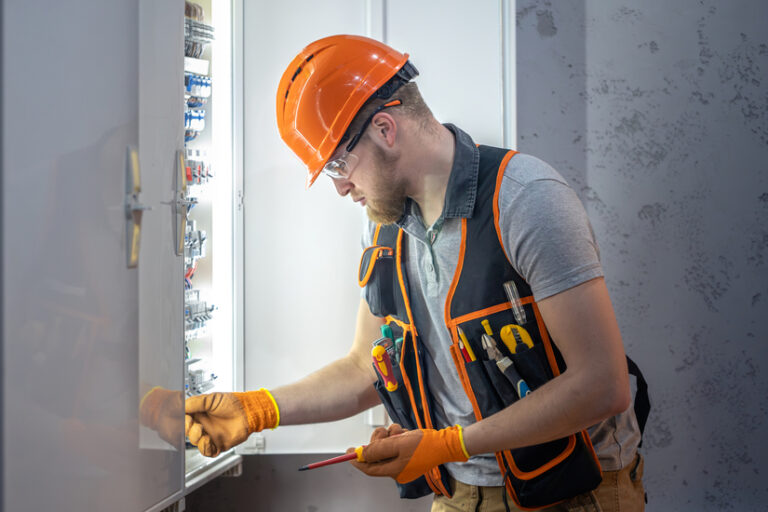
Tradespeople, electricians, plumbers, and builders are often the ones who stumble across these dangers first. A wrongly marked underground cable can be lethal if struck by a digger.
Stray voltage can seep into the ground or metal structures, creating shock risks.
For the average person, these issues are rarely visible. Yet they underline the need for constant vigilance and safety measures, especially in the construction and maintenance industries.
Economic And Geopolitical Vulnerabilities
The UK doesn’t generate all of its own electricity. A significant portion flows in through interconnectors, massive undersea cables linking us to France, the Netherlands, and Norway. These connections are vital, but they also expose the grid to external risks.
Geopolitical tensions, international disputes, or even equipment faults abroad can ripple through into Britain’s supply.
On top of that, reliance on imported gas to balance renewable shortfalls ties energy security to global markets. Rising prices, as seen during recent energy crises, show how fragile the balance can be.
It’s not just a technical problem. When the grid wobbles, the economy wobbles with it. Businesses, households, and entire sectors feel the strain.
What’s Being Done To Protect The Grid?
It’s not all doom and gloom. Efforts are being made across the UK to modernise the grid. Smart grids are being rolled out, capable of redirecting power intelligently and making the system more flexible.
Battery storage, think giant warehouses of lithium-ion cells, is being installed to bank surplus renewable energy for later use.
Demand-side response is another tool. Rather than only adjusting supply, the grid can now encourage shifts in demand, like offering lower tariffs if households run appliances overnight, spreading the load more evenly.
At a national level, government strategies focus on climate resilience, new infrastructure investment, and tighter cybersecurity.
On the local scale, distributed generation, solar panels on homes, small wind turbines, and battery systems help reduce strain on the main grid.
The Role Of Public Awareness And Skilled Tradespeople
For all the technology and investment, one element often gets overlooked: people. Awareness among the public and trades is crucial.
Everyday decisions, when to charge the EV, how safely work is carried out near underground lines, shape the resilience of the grid as much as big infrastructure projects.
Tradespeople in particular play a frontline role. Electricians wiring homes for solar, plumbers fitting heat pumps, builders working near cables, all directly interact with the grid’s hidden veins. Training and safe practices make the difference between hazard and progress.
Tools like Tradefox, a simulation app for trades, are helping bridge the gap. By letting electricians and plumbers learn complex scenarios without real-world risk, it raises skills while reducing danger.
This kind of training isn’t just useful; it’s essential in keeping both workers and the grid itself safe.
Living With An Invisible Risk
The UK’s grid is a marvel of engineering. It’s robust, it’s flexible, and it has carried us through decades of change.
But it isn’t invincible. Ageing infrastructure, cyber threats, climate pressures, supply imbalances, each is a danger hidden inside the very system we take for granted.
The good news is that awareness, investment, and innovation are pushing back. Engineers, policymakers, and tradespeople are working to protect the lifeline we can’t live without.
The grid will always carry risk, there’s no way around it.
What matters is how we face those risks. With preparation, skill, and a clear eye on the challenges ahead, Britain’s grid can remain strong, even in a world that’s changing faster than ever.