
Gas systems in homes and workplaces are the kind of thing most people don’t think about until there’s a problem.
Yet behind every warm boiler, cooker, or commercial kitchen lies something deceptively simple but absolutely critical: the pipework that carries the gas.
Get the sizing wrong, and safety is compromised. Get it right, and the installation runs smoothly for years with minimal fuss.
This isn’t just about convenience or efficiency; it’s about life safety and legal compliance. Undersized pipes can starve appliances of the pressure they need, leading to malfunctions and, in the worst cases, dangerous levels of carbon monoxide.
Oversized ones might not be a hazard in the same way, but they add unnecessary cost and installation complexity.
The UK has clear standards to stop those mistakes, and that’s where good practice in pipe sizing really matters.
Why Pipe Sizing Matters In Gas Installations?
Think of gas pipework like the veins of a building. Too narrow, and the flow’s restricted. Too wide, and you’re wasting material and making maintenance awkward.
When a boiler or cooker doesn’t get enough pressure, it’s more than just a nuisance. A flame that keeps going out or appliances that fail to reach their rated output often trace back to undersized pipes.
What starts as “the boiler keeps tripping” could actually be a pipework problem. Even more concerning, starved appliances can end up burning gas incompletely, releasing carbon monoxide, a silent danger.
Oversizing isn’t as dramatic, but it’s far from ideal. Larger pipes cost more, are harder to route, and can create pressure stabilisation delays.
Multiply that across a housing block or a restaurant kitchen, and you’ve got inefficiency baked into the system.
Correct sizing makes sure appliances run as intended, safety margins are maintained, and operating costs stay under control. It’s not a box-ticking exercise, it’s the foundation of safe and reliable gas use.
UK Regulations And Standards Governing Gas Pipe Sizing
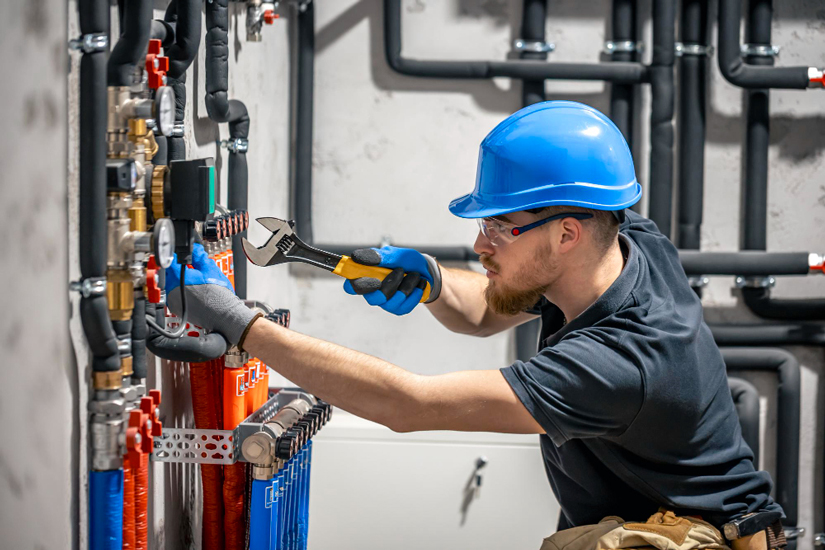
Gas pipe sizing isn’t left to guesswork in the UK. The rules are set out clearly, with safety written into law.
The Gas Safety (Installation and Use) Regulations 1998 form the backbone. They legally require that any gas work be carried out by a competent person, translated in practice as someone who’s Gas Safe registered. It’s not optional; landlords, homeowners, and contractors are all bound by it.
On the technical side, engineers lean on IGEM/UP/2 Edition 3, the industry standard for gas pipework design in domestic and small commercial premises.
Among other things, it specifies the maximum acceptable pressure drop, typically 1 mbar for natural gas in domestic systems. That tiny number makes a huge difference. Miss it, and the system can’t be signed off as compliant.
The Gas Safe Register plays the enforcement role, ensuring only trained, certified engineers handle this work.
It’s a closed loop: regulations set the requirement, IGEM standards give the technical detail, and Gas Safe enforces competence. Anyone cutting corners is not only risking safety but also breaking the law.
Key Factors In Correct Gas Pipe Sizing
Sizing pipes correctly isn’t just about looking up a number in a chart. Several variables come into play, and ignoring any of them can throw the whole calculation off.
- Appliance demand – Every boiler, cooker, or heater has a rated gas load. The system must supply enough for peak demand without faltering.
- Pipe length – Longer runs create more resistance, which translates to pressure loss. A 15-metre stretch isn’t the same as a 2-metre one.
- Material and bore size – Copper, steel, or plastic pipes all have different internal diameters even at the same nominal size. It’s the bore that counts, not just the label.
- Fittings and bends – Every elbow, tee, or junction adds resistance. A “short” run with multiple bends can cause as much drop as a longer straight one.
- Diversity factor – Not all appliances run at full tilt simultaneously. A careful allowance for diversity keeps systems efficient without overengineering.
Balancing all of these requires calculation, not intuition. A pipe that looks “about right” could be miles off once the maths is done.
Practical Consequences Of Incorrect Pipe Sizing
What actually happens when sizing goes wrong? Quite a lot, and none of it good.
- Boilers can cut out unexpectedly or refuse to ignite.
- Pilot lights can blow out repeatedly, frustrating users and prompting unnecessary callouts.
- Incomplete combustion can occur, raising the risk of carbon monoxide leaks, one of the most serious hazards in a building.
- Installations can fail Gas Safe inspections, leaving property owners with unsafe notices and contractors facing costly remedial work.
- In commercial settings, like a restaurant kitchen, it could mean downtime at peak hours, translating to lost business and reputational damage.
It’s rarely just a small inconvenience. The ripple effect can cost thousands, not to mention the safety implications.
Best Practices For Gas Engineers And Installers
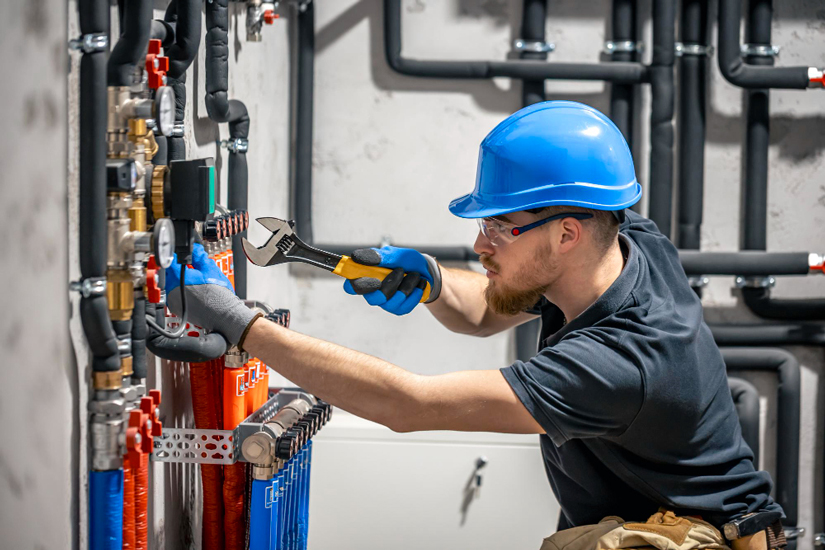
Competence shows in the details. The best engineers follow some tried and tested practices:
- Always carry out proper load calculations before installation begins.
- Refer to manufacturer data and IGEM/UP/2 tables rather than relying on memory.
- Keep total pressure drop within 1 mbar in domestic settings.
- Plan layouts to minimise bends, elbows, and unnecessary junctions.
- Use pipe clips and supports to prevent stress points over time.
- Document the system design and installation for future servicing and compliance checks.
A good installer knows that paperwork isn’t just bureaucracy, it’s protection. If an issue arises years down the line, clear records show that the system was designed and fitted to the right standards.
Tools And Resources For Accurate Pipe Sizing
There’s no need to reinvent the wheel. Plenty of resources make pipe sizing accurate and straightforward.
- Sizing charts and tables provided in the IGEM guidance remain the go-to reference.
- Digital calculators and apps help crunch numbers for complex layouts, saving time on large projects.
- Software design tools are invaluable for commercial or industrial systems where multiple appliances are in play.
- Gas Safe Register updates and IGEM guidance notes ensure engineers are working with the latest standards.
- CPD courses and training sessions keep knowledge sharp, especially as new technologies and fuels emerge.
What separates a competent installer from a great one is often the willingness to use the best tools available.
Future Trends In Gas Installations
Gas isn’t static. With the UK looking towards hydrogen-ready boilers and hybrid heating systems, the demands on pipework are changing. These appliances may have different requirements, and standards will adapt accordingly.
There’s also a growing emphasis on efficiency, not just from an environmental standpoint but because consumers expect more for less.
Engineers who stay ahead of the curve will be better placed to design systems that are safe, future-proof, and compliant.
Actionable Takeaways For Installers & Property Owners
- Engineers : never cut corners on calculations. Standards exist for a reason.
- Landlords and homeowners : always insist on a Gas Safe registered engineer.
- Property managers : schedule routine servicing and safety checks.
- Everyone : treat gas safety as an investment, not an afterthought.
Conclusion
Safe gas installations don’t happen by chance. They’re the result of proper planning, accurate pipe sizing, and adherence to UK standards.
When the bore and length of a pipe are chosen with care, appliances perform as intended, risks are minimised, and compliance is assured.
It’s a simple truth, get the basics right, and the whole system benefits. Pipe sizing isn’t just numbers on a chart; it’s the difference between a safe, efficient installation and a dangerous, costly one.