
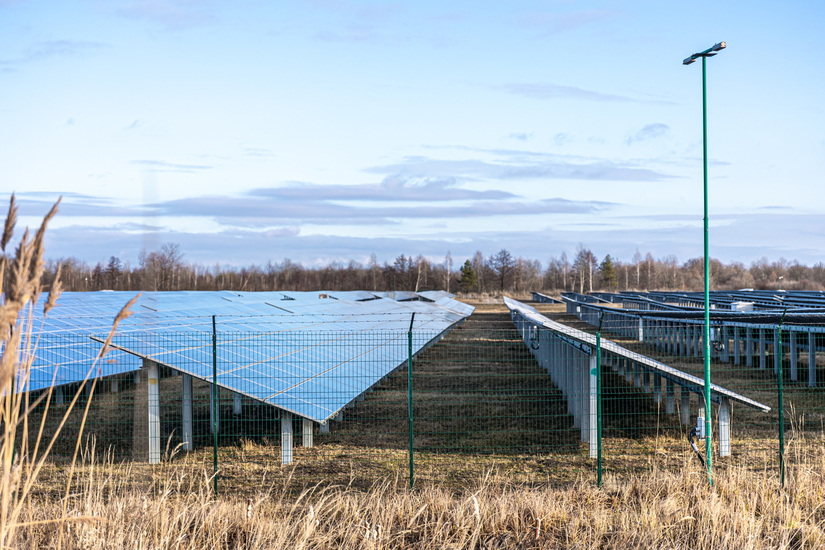
Across the UK, the sight of rooftops glittering with solar panels has gone from novelty to normal. Ten years ago, you might have spotted the odd array on a new-build or an eco-conscious homeowner’s roof.
Now, entire estates, schools, farms, and even supermarkets are making use of them. Rising energy bills, government targets for net zero, and a public push towards greener choices all play their part.
But here’s the thing: while many people like the idea of solar power, far fewer actually know how the technology works.
How can something as simple as sunlight be transformed into electricity that boils your kettle or charges your phone? The answer lies in a mix of physics, clever engineering, and practical application suited to UK conditions.
Let’s break it down step by step.
The Basics Of Solar Energy
Sunlight isn’t just warm light streaming through the clouds. It’s energy in the form of photons, tiny packets that travel through space and hit the Earth. When those photons reach the right material, their energy can be harnessed.
Solar panels use what’s known as the photovoltaic effect. This is the process that converts sunlight directly into electrical current. Imagine it like catching raindrops on a roof.
Each drop of water has weight and movement, and with the right system in place, gutters, pipes, and storage tanks, you can capture and use it. Solar works in much the same way, only instead of rain it’s sunlight, and instead of gutters it’s silicon cells and wires.
Anatomy Of A Solar Panel
A solar panel isn’t just a slab of black glass. It’s a carefully layered system built to capture light, protect delicate components, and last for decades in all weather. Let’s peel it back:
- Photovoltaic (PV) cells – the heart of the panel, usually made from silicon. These are the actual components that absorb sunlight.
- Glass layer – a durable, transparent cover that allows light in while keeping out rain, snow, and debris.
- Encapsulation layers – think of these as the glue and cushioning, holding the PV cells in place and protecting them from vibrations or moisture.
- Backsheet – the rear layer that insulates and shields against the elements.
- Aluminium frame – keeps everything rigid and allows the panel to be mounted securely.
Each panel contains dozens of PV cells wired together, and then multiple panels are linked up in series or parallel to form an array.
In the UK, these arrays need to withstand rainstorms, high winds, and the occasional heavy snowfall. Manufacturers test them rigorously, and the standard lifespan is now 25–30 years.
The Photovoltaic Effect In Detail
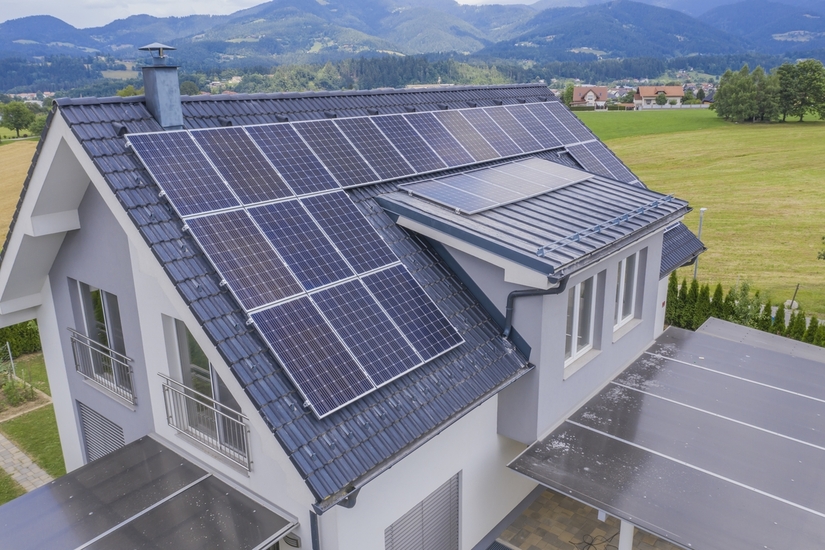
Here’s where the science kicks in. When photons from sunlight hit a silicon cell, they transfer their energy to electrons in the silicon atoms. That little push knocks the electrons loose. And when electrons start moving, you’ve got electricity.
Of course, it’s not random chaos. The silicon in panels is treated (or “doped”) with other elements to create an electric field.
This electric field acts like a slope, guiding the freed electrons to flow in a single direction. That flow is direct current (DC) electricity.
To put it simply: sunlight excites electrons, the panel directs them, and wires carry them away. Typical UK panels work at around 18–23% efficiency, meaning they capture a fifth of the sunlight that hits them.
It may sound low, but given the vast amount of sunlight reaching a roof, it’s more than enough to power appliances, lighting, and even electric vehicles.
From Sunlight To Household Electricity
Of course, the DC electricity produced by panels isn’t what powers your fridge. Homes and businesses in the UK run on alternating current (AC). That’s where the inverter comes in.
- The panels generate DC electricity.
- The inverter converts DC into AC, syncing with the 230V supply used in UK properties.
- That electricity then flows into the consumer unit (fuse box) and powers appliances directly.
- If the panels generate more than you use, the excess can either charge a battery (if installed) or be exported back to the grid.
This grid export isn’t wasted, it can earn the homeowner money through the Smart Export Guarantee (SEG) scheme.
Batteries, on the other hand, are gaining popularity because they let people store daytime energy for use in the evening. It’s the difference between running your washing machine on sunshine and still needing to rely on the grid once the sun’s gone down.
Different Types Of Solar Panels
Not all panels are the same. The three main types are:
- Monocrystalline – made from a single crystal structure, highly efficient, sleek black look, often the go-to for UK homes with limited roof space.
- Polycrystalline – slightly less efficient, blue in colour, but more affordable.
- Thin-film – flexible, lightweight, but not as efficient. These are more common in commercial or unusual installations rather than residential.
For most British homes, monocrystalline is the preferred choice, striking a balance between performance and aesthetics.
Performance Factors In The UK
Let’s clear up a common myth: solar panels don’t need blazing sunshine to work. They generate electricity from daylight, not heat. That said, several factors affect their performance:
- Sunlight hours – on average, the UK gets around 4 hours of usable solar per day, but this varies. Cornwall will see far higher yields than the Highlands.
- Roof orientation – south-facing roofs capture the most, though east and west orientations still work, just with reduced efficiency.
- Roof angle – the optimal tilt in the UK is around 30–40 degrees.
- Shading – chimneys, trees, or even a neighbour’s extension can cut output significantly.
A professional survey is vital. MCS-certified installers will calculate expected yield and design a system that maximises what your property can generate.
Safety And Regulations
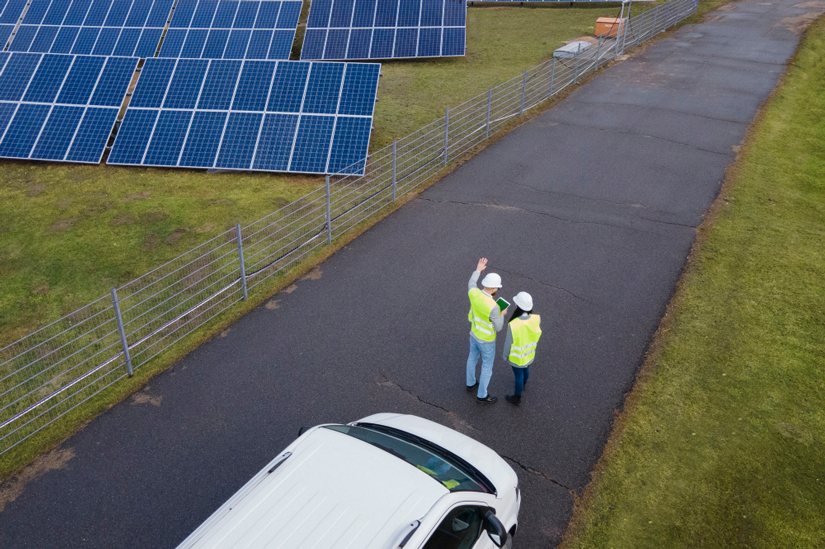
Electrical safety is critical. Panels themselves don’t carry much risk, but incorrect wiring or poorly fitted systems can be dangerous. That’s why UK installations follow BS 7671 Wiring Regulations and include protection such as isolators, RCBOs, and sometimes surge protection devices.
Planning permission isn’t usually needed unless you’re in a conservation area or on a listed building. Grid connection, however, is regulated for larger systems that require approval from the Distribution Network Operator (DNO).
Done correctly, the systems are safe, low-maintenance, and long-lasting.
Advantages Of Solar Panels
The appeal of solar power in the UK is clear:
- Reduced energy bills at a time when tariffs are unpredictable.
- Lower carbon footprint, supporting national climate goals.
- Greater energy independence, less reliance on the grid.
- Potential boost in property value.
- VAT relief on solar panel installations since 2022.
For households worried about both costs and sustainability, solar ticks both boxes.
Limitations And Challenges
It’s not all sunshine. Some realities must be acknowledged:
- The upfront cost remains significant, though prices have fallen compared to a decade ago.
- Performance depends on location and roof suitability.
- Panels aren’t always aesthetically pleasing, particularly on period properties.
- Battery systems, while valuable, add to the cost.
That said, payback times in the UK are getting shorter, especially with current energy prices.
Real-World Applications In The UK
Solar isn’t just about homes. Businesses use panels to cut running costs, farms power barns and irrigation pumps, and local councils invest in solar for schools and public buildings. Even car parks are beginning to sport solar canopies that feed EV chargers.
This widespread use shows how versatile the technology has become, beyond the domestic market.
The Future of Solar In The UK
Technology isn’t standing still. Panel efficiency continues to improve, new materials like perovskite are on the horizon, and integration with EVs and smart grids is expanding.
With the UK’s legally binding net zero targets for 2050, solar is set to play a crucial role. It won’t replace all other energy sources, but as part of a balanced system, it’s becoming indispensable.
Helpful Tools For Learning And Practice
For tradespeople interested in solar installations, or those already in the electrical and plumbing fields, learning and practice makes perfect.
That’s where Tradefox comes in. It’s a simulation app designed for electricians, plumbers, and other trades to learn and refine their skills safely. Instead of trial and error on live systems, it provides a hazard-free environment to build confidence and accuracy, a valuable step before handling real-world solar projects.
Conclusion
Solar panels work by capturing sunlight, exciting electrons within silicon cells, and converting that into usable electricity through inverters and careful wiring. From there, energy can power appliances directly, charge batteries, or feed into the national grid.
In the UK, panels are proving themselves not just as a green choice, but as a financially sound one too.
They bring households greater independence from volatile energy prices while helping the nation move towards its climate goals.
They’re not perfect, costs, roof suitability, and aesthetics all play a part in the decision-making. Yet, the momentum is undeniable.
The technology is maturing, the benefits are growing, and as each year passes, solar power becomes less of an alternative and more of a standard part of Britain’s energy landscape.