
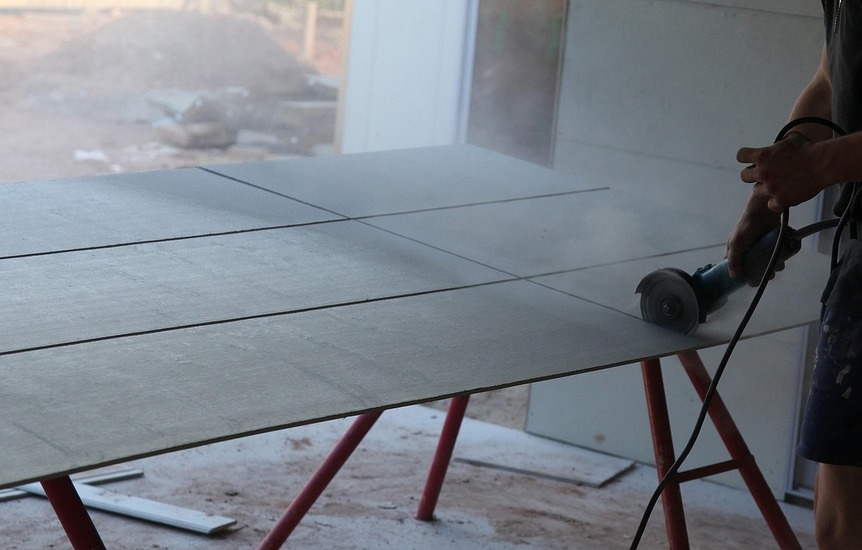
Ever watched a building go up or a kitchen get a custom cabinet and wondered, “How’d they make that fit so perfectly?” Behind those tight joints and straight walls is a carpenter, someone who blends math, craftsmanship, and a bit of artistry.
For anyone drawn to solid results and hands‑on challenges, carpentry is more than a job. It’s a skillset that keeps you rooted in creativity and structure.
Let’s break down what it takes to become a carpenter, from basics like finishing school to mastering journeyman status, and earning certifications that open doors.
Understanding The Carpenter’s Role
Carpentry isn’t just swinging a hammer. It’s a multi‑faceted trade involving
- Framing - Building the skeleton of a house.
- Finish work- Cabinets, trim, molding, and aesthetic details
- Formwork and concrete- Shaping pourable materials
- Blueprint reading- Interpreting plans, symbols, and specs
You might start on a new construction site, swinging nails for floor joists. Later, you might be measuring for custom kitchen cabinets. Every job has its own rhythm, and you adapt.
It’s a trade that demands mental agility as much as muscle. Carpentry blends geometry, timing, safety, and problem‑solving. One day you’re calculating angles for a staircase; the next, teaching a younger apprentice how to align a wall.
Step 1: High School Diploma (Or Equivalent)
Think of this as laying your foundation. A high school diploma (or GED) proves you’re reliable and equipped with basic skills, especially math (geometry and algebra) and blueprint reading. Nothing hustle‑y or flashy here, just necessary groundwork.
Those who skip this often hit a wall later, especially when applying for apprenticeships. So investing time in finishing school really pays off.
Step 2: Pre‑Apprenticeship Or Trade School
Walking straight onto a job site without any training is like trying to play Beethoven after one piano lesson. You need a starting point. Pre‑apprenticeship programs and trade schools offer:
- Basic carpentry techniques – From measuring properly to basic cuts
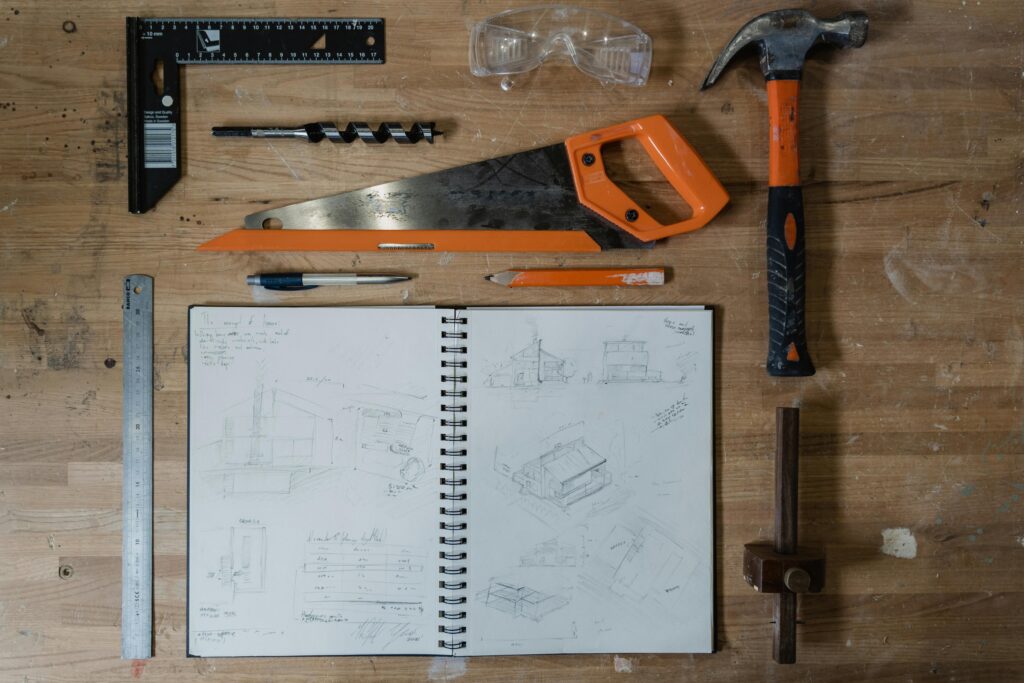
- Tool familiarity – How to use saws, levels, routers safely
- Job site safety – Gear, regulations, avoidance of common hazards
- Blueprint reading – Symbols, scales, layers
Some courses last a few months; others run two years. It’s not mandatory, but grads often get ahead when applying for apprenticeships. Trade schools help boost confidence and reduce costly mistakes on the job.
Step 3: Apprenticeship Programs
Where to find them
- Union programs (e.g., local carpenter unions)
- Non‑union contractors partnering with training centers
- College‑based apprenticeships
What you’ll learn on site
- Framing houses, building stairs, installing windows
- Reading blueprints, using layout tools
- Handling materials and working under different weather conditions
In the classroom
- Carpentry math (fractions, angles, area, layout)
- UK-Standard safety protocols and local building codes
- Blueprint interpretation, how specs translate to real walls
It’s slow at first: sweeping sawdust and carrying boards. But bit by bit, prep work turns into skillful layout, then precision cuts. And yes, you get paid while learning. That makes this path low‑stress and low‑risk compared to other adult education routes.
Step 4: Hands‑On Field Experience

- Site dynamics – weather, tight schedules, subcontractor coordination
- Problem solving – unexpected angles, damaged materials, onsite adjustments
- Efficiency – learning shortcuts, planning for daily progress
- Teamwork and communication – reading moods, managing timelines, coordinating with site supervisors
Real‑world exposure builds judgment and speed. Stick with it long enough, and you’ll notice how different job sites feel, residential vs commercial vs industrial. That adaptability matters when moving up the ladder.
Step 5: Certification And Journeyman Status
Why certifications matter
- They open doors to higher‑paying jobs
- Contractors prefer them for liability, compliance, and quality assurance
- They may be required for bigger projects
Common certifications
- CSCS card (UK) – Shows you’ve passed a basic health and safety test plus an NVQ Level 2–3
- Local journeyman exam – Tests practical and theoretical competency
- First Aid / CPR – Safety compliance on busy sites
Achieving journeyman status
- In the UK, it’s earning an NVQ Level 2/3, getting your CSCS (red → blue → gold depending on experience), and completing site safety courses
Reaching journeyman level signals professional readiness. You’ll enjoy higher pay, more independence, and the ability to take on leadership tasks.
Step 6: Options For Advancement
At journeyman level, the door swings open:
- Lead carpenter or foreman – Coordinate small crews, review plans, manage installs
- Estimator or project manager – Take on budgeting, scheduling, client estimates
- Specialist roles – Cabinetmaking, historic restoration, timber framing
- Contractor or business owner – Start your own crew, bidding on projects
Even more? Tech is taking off in construction. Laser levels, CNC routing, digital measuring tools, even virtual modeling. Stick with continued training or certification if you want to keep evolving.
Weighing The Trade: Pros and Cons
Pros
- Tangible results – You see physical progress every day
- Growing pay – Experience leads to steady wage increase
- Stable demand – Even when economies dip, people renovate
- Creative problem‑solving – Blueprint reading, adjustments, craftsmanship
- Career mobility – From site work to management or specialization
Cons
- Physically demanding – Heavy lifting and long hours
- Weather risks – Outdoor work exposes you to sun, cold, rain
- Injury potential – Sharp tools, high platforms, machinery hazards
- Project variability – Jobs can flare and freeze depending on seasons
Most tradespeople feel the benefits outweigh the challenges, especially if you respect the trade and remain safety‑oriented.
Sharpening Skills Safely
On‑site however, mistakes can cost time, money, or safety. And restarting a staircase because of a bad layout can hurt morale. That’s where simulation‑based tools add real value.
Thinking about refining blueprint reading, job‑site judgment, or safety awareness without cutting wood? Tradefox offers a practical training sandbox for tradespeople, plumbers, carpenters, electricians. It lets you run scenarios, avoid hazards, and learn without risking life or limb.
Real training, risk‑free tweaks, and instant feedback. Think of it like flight simulators for pilots, but for your daily job tasks.
Practical Tips For The Path
1. Map out local options
- What trade schools or unions are nearby? Visit their sites, understand costs, schedules, entry requirements.
2. Speak to working carpenters
- Real advice beats brochures. Ask about day‑to‑day routines, tough lessons, job‑site culture.
3. Start tool‑lean
- Quality measuring tools and safety gear matter more than expensive saws early on.
4. Build a logbook
- Note projects and techniques, evidence for apprenticeship slots or journeyman application.
5. Keep learning
- Licences and certifications aren’t one‑and‑done. Safety regs, codes, and materials continuously evolve.
Final Thoughts
Carpentry marches at the intersection of creativity, precision, and discipline. The journey from diploma or GED, through trade school, apprenticeship, and journeyman certification, can take years. But each phase sharpens both skill and character.
It’s a career grounded in real results and steady demand. With the right mindset, tools, and training, including modern platforms like Tradefox, carpentry offers more than a job. It lays down a lifetime of possibilities, one board at a time.