
Japanese joinery has a reputation for being a high-precision, no-nonsense, and downright beautiful way of working with wood.
No glue, no screws, no nails, just a marriage of wood and clever geometry that’s been the backbone of Japanese carpentry for centuries.
And to answer the big question straight off the bat: UK carpenters are jumping on the glue-free bandwagon because it’s a winner all round: it’s sustainable, mechanically sound, structurally impressive, and these days, high-end clients are starting to demand it.
Building and furniture making are moving towards a more environmentally-friendly, lower-chemical model, and all the evidence suggests this is a direction many UK professionals are happy to be heading in.
This guide gives you a down-to-earth look at what Japanese joinery’s all about, why it matters to UK carpenters, and where it fits into the modern world of construction and furniture making.
What Sets Japanese Joinery Apart?
At heart, Japanese joinery’s a very simple idea: timber should hold itself together.
The geometry does the work, the clever cuts and shapes are all designed to make the wood pull into itself when you put it together, creating a bond that’s not just strong but capable of handling years of wear and tear.
For over a thousand years, this approach has been used in temples, townhouses, shrines, and all sorts of other buildings, and a lot of it is still standing.
What’s more, it’s a system that’s been refined to an incredible degree over all that time, and one that’s chosen not to rely on adhesives or metal fixings like western joinery so often does.
So, what characterises the method?
- Tiny margins for error, the joints have to fit together with near-perfect precision.
- Hand tools all the way, traditionally, most of the work is done with hand tools, no power tools in sight.
- Smooth surfaces, no adhesive in the way, the gaps are so fine, you can almost see the wood's natural texture shining through.
- Long-term reliability, the joints can be taken apart, repaired, or even replaced without causing any damage to the structure.
And the best bit? This approach still feels surprisingly modern, even today. It fits right in with a growing preference for craftsmanship that’s not only sustainable, but also looks great and doesn’t shout about itself.
Why UK Carpenters Are Now In On The Secret
A couple of years ago, Japanese joinery was a bit of a niche interest, known only to a select few.
But now, UK carpenters, furniture makers, and woodworkers are picking it up in droves, and several factors are behind this shift.
1. Growing Demand For Sustainable Buildings
As clients become more aware of the chemicals that are in all the adhesives and the impact they have on indoor air quality.
They’re starting to ask for buildings that avoid them altogether. Glue-free joinery is a strong alternative, strong, long-lasting timber connections that don’t rely on synthetic products.
2. High-End Demand For Visible Craftsmanship
In fancy bespoke workshops and architectural joinery firms, there’s a trend back towards showing off the craftsmanship rather than hiding it.
A perfectly-cut interlocking joint has a presence all its own, a presence that a manufactured fixing just can’t match.
It says so much about the skill and care that’s gone into the work, and high-end clients really take notice of that.
3. Durability And Easy Servicing
Adhesives go off, wood shifts, and metal fixings rust. But a wooden joint is like the wood itself, it ages well over time.
And when something does go wrong, a mechanical joint is so much easier to fix than one that’s held together with glue.
4. A Wider World Of Learning And Shared Knowledge
The internet, social media, woodworking forums, and specialist courses have all made Japanese joinery accessible to a much wider audience than ever before.
With online tutorials, close-up project videos, and specialist classes showing up the craft in all its glory, it’s never been easier to learn the techniques and put them into practice.
The result is straightforward: UK carpenters are no longer just observing these methods, they’re integrating them where appropriate.
Key Japanese Joints Relevant To UK Carpenters
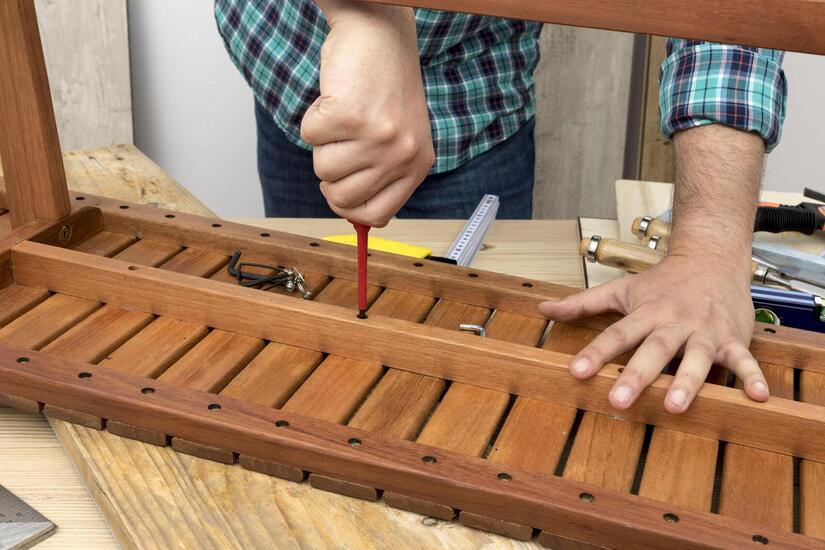
There are hundreds of traditional joints, but a few reliable ones consistently turn up in UK workshops, rather than listing them here as some sort of definition. Instead, here’s a more practical example of how these joints are used in real life :
Mortise and Tenon Variations, With A Japanese Twist
Western carpenters have long used mortise and tenon structures, but their Japanese counterparts are a whole lot more intricate.
In fact, sliding tenons, locked shoulders, and multi-axis engagement points make for stronger, neater joints, especially when you’re building something visible like a piece of furniture.
Kanawa Tsugi (Scarf Joint), The Professionals Choose This Version
This is a pretty sophisticated method for joining beams. UK tradespeople working on timber framing or heritage repair often go for this version because it gives you a strong, clean connection without having to resort to steel plates.
Shachi-Sen (Locked Dovetail Joint), No Glue Needed Here
This joint uses a tapered locking wedge, cut from the same timber as the rest of the work. We find cabinet makers really appreciate this joint because it gives a secure lock without the need for glue, which means the carcass and frames stay completely serviceable.
Kigoroshi (Compression Techniques), A Subtle But Effective Method
You see, instead of cutting wood away, fibres are compressed using a carefully controlled hammering action. The timber then swells back into position, tightening the joint.
It’s a bit of a tricky technique, but an increasing number of UK joiners are experimenting with it when precision is really important.
Tools Used In Japanese Joinery: And How To Replicate Them In The UK
Although Japanese carpenters traditionally use all sorts of specialist tools, UK tradespeople can replicate the principles with a bit of a combination of Japanese and Western gear.
Pull Saws (Nokogiri), The Smoothest Saws Around
These pull saws cut on the pull stroke, leaving you with clean, thin kerfs and loads of control. Loads of UK workshops now keep at least one of these for fine joinery work.
Chisels (Nomi), Unbeatable Edge Retention
They’re famous for the laminated steel construction and edge retention of these chisels. They make it possible to get crisp joint walls, which is vital in glue-free joinery.
Kanna, The Japanese Planes
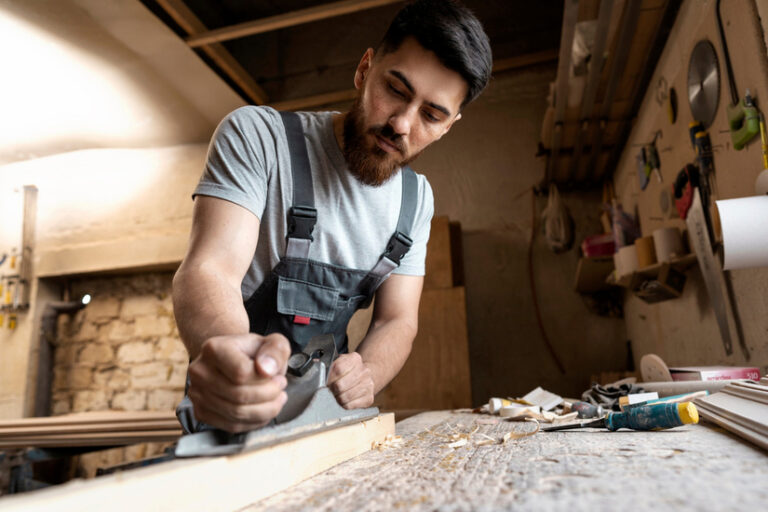
You can use these for creating surfaces that are absolutely polished and ultra-flat. With a bit of practice, you can get a similar result with a well-tuned Western hand plane.
Marking Tools, The Accuracy Battle
Accurate layout is the core of Japanese joinery, and whether you’re using Japanese gauges or Western knives, the key is about consistency and being able to reference things accurately.
The tools aren’t the problem, it’s the accuracy.
Can You Really Get Away With Glue-Free Joinery In Everyday UK Carpentry?
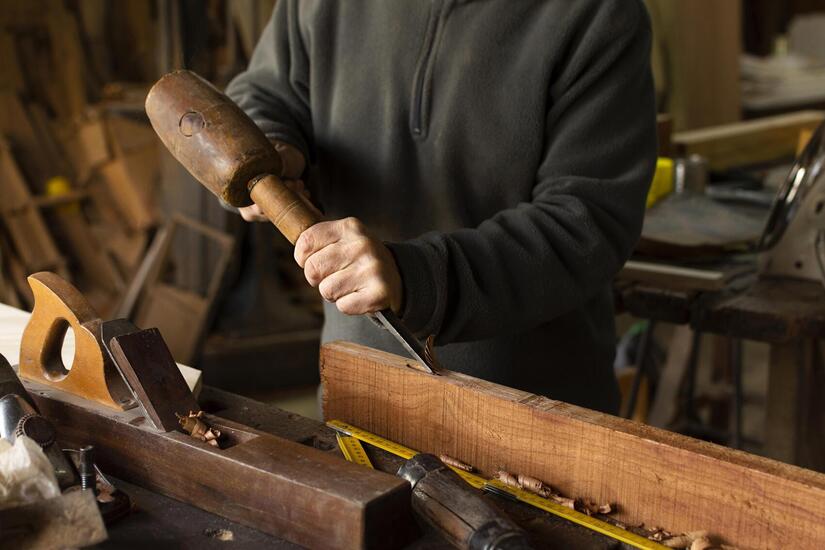
It can be, but it really depends on the project.
When It Makes Sense
- Bespoke furniture is a great place to start.
- Showpiece joinery is a bit of a no-brainer.
- Visible framing always looks better with some form of mechanical joinery.
- Outdoor structures and heritage-style builds all benefit from the extra strength and clear aesthetic value.
Getting Started With Japanese Joinery: A Practical First Step
Getting good at these joints really does take patience, but new carpenters on the block often focus on:
- Repeating the basic interlocking joints until they become second nature.
- Mastering accuracy with their marking really does make all the difference.
- Practising up on some softwoods before moving on to the harder stuff.
- Getting a handle on grain behaviour and timber movement, it’s all about anticipating what might happen
Safety is worth mentioning, too. These joints require very sharp tools and controlled cuts. Getting good habits in place from the very beginning really does prevent injuries later.
Where Simulation Supports Skill Development
Before working on real materials, many carpenters practise procedures, sequencing, and safety fundamentals through simulation-based learning.
Platforms like TradeFox offer an adaptable environment for developing core construction skills, safe isolation, plumbing basics, electrics, and more, using guided, realistic modules.
Trainees can build confidence in precision and technique without the risk of damaging timber or tools.
Final Words
Japanese joinery isn’t replacing modern construction methods, but it is reshaping expectations around timber craftsmanship.
Its rise among UK carpenters reflects a broader industry movement: valuing durability, sustainability, and quality over convenience.
As more professionals explore glue-free joints and the principles behind them, these techniques are becoming a respected addition to the UK’s carpentry landscape, used where they add genuine value, and appreciated for their practicality as much as their beauty.