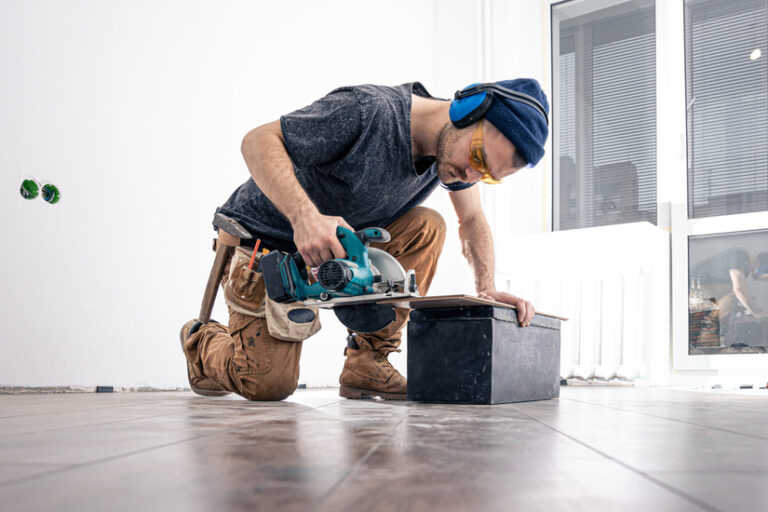

Large-format tiles are still pushing the boundaries of both residential and commercial spaces, thanks to their sleek lines, reduced grout lines, and ability to make rooms feel bigger.
But anyone who’s worked with them knows they’re a whole different beast. These tiles aren’t just bigger versions of the ones we’ve always used, their weight, rigidity, and demands for precise bedding make them a real challenge to work with.
And with large format porcelain or natural stone, success is often dependent on a few key factors: choosing the right trowel, preparing the tile themselves, and lifting it safely with some proper equipment.
Why Large Format Tiles Require A Different Way Of Thinking
Working with large-format tiles introduces a whole new set of challenges. Their size and type mean that tiny little mistakes become major problems, and you can’t hide them like you could with smaller tiles.
If the tiling surface is a bit uneven, or there’s even a tiny bit of trapped air, the whole tile will sound hollow or sit funny. Large format porcelain, in particular, is a real unforgiving beast, it doesn’t bend to accommodate mistakes.
And in terms of coverage, it’s a whole different ball game. For wet areas, commercial entrances, and high-traffic corridors, you need to achieve near-complete contact between the adhesive and the back of the tile to get a secure bond.
The combination of scale, weight, and how dense the material is means preparation and handling are way more important than they would be with standard tile sizes.
Choosing The Right Trowel For Large Format Tiles
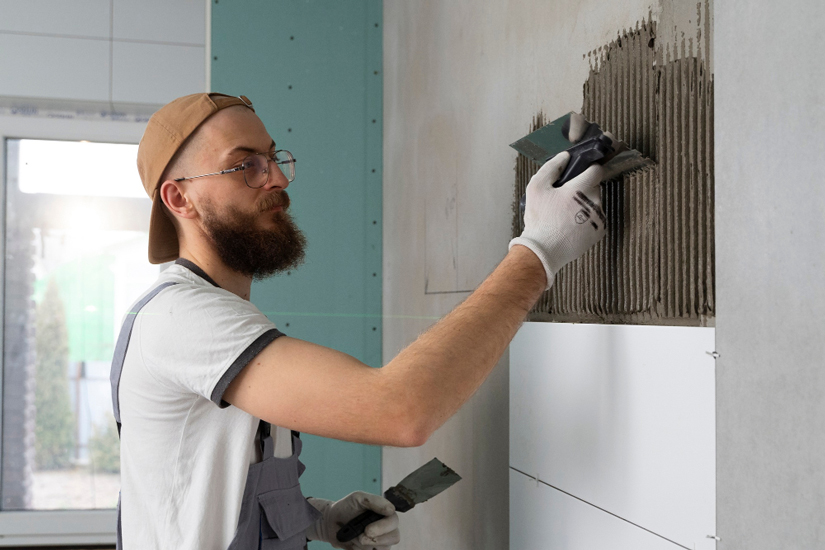
One of the most overlooked steps in tile installation is choosing the right trowel, and it’s a critical one.
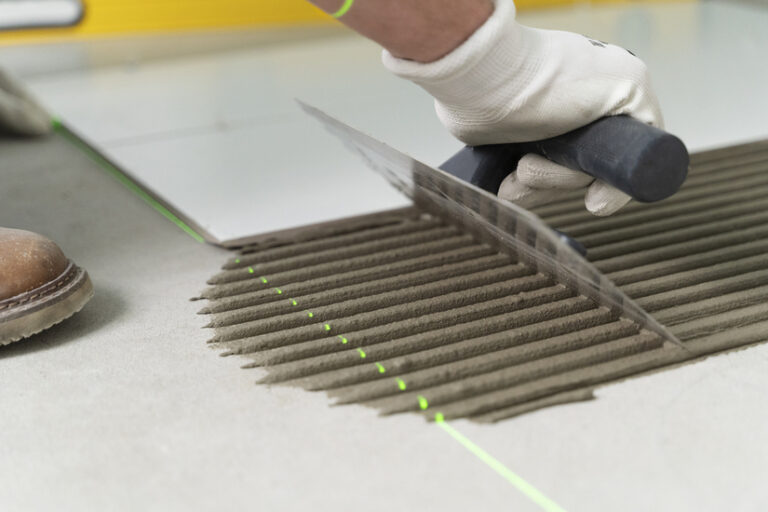
While that square-notched trowel is a staple for most tile installations, large format tiles often benefit from deeper notches or different profiles to help the adhesive do its job.
The size of those notches is crucial too, a small trowel designed for smaller tiles just isn’t going to provide enough adhesive to get the job done.
A deeper notch or a different profile helps the adhesive spread across the entire surface of the tile, reducing the risk of hollow spots and getting a consistent bed of adhesive.
Lots of professionals mix and match between square-notched and U-notched profiles, depending on the adhesive they’re using and the tile they’re working with.
And it’s not just about the notches, the flat side of the trowel is important too, it helps to flatten out the adhesive before you comb it, creating a more even bed.
The size of the trowel you choose will depend on the size and type of tile you’re working with. Here’s a rough guide:
- For 600 × 600 mm tiles, you're looking at a 10-12 mm notch
- For bigger square formats, go for 12 mm
- For rectangular or elongated tiles, 12-15 mm is a good bet
If you’re working with big slab-style or oversized porcelain tiles, you might need to go deeper with a Euro-style notch.
A little experiment with a tile lift test on the first tile you lay can give you an idea if the trowel you’ve chosen is going to get the job done.
Back-Buttering: A Step That Should Not Be Skipped
Back buttering is a simple trick that makes all the difference when it comes to getting large format tiles to stick properly.
When working with porcelain tiles or natural stone, those lovely surfaces of yours can have tiny little valleys or manufacturing residue that just love to get in the way of adhesion.
But a thin layer of adhesive on the back of each tile sorts that problem out in no time. Now, let’s talk about buttering your tiles right. You want a thin, smooth layer, applied with the flat side of a trowel.
It’s not a second set of ridges we are looking for here, but rather a bonding coat that sits on top of the primary ridges laid out on the substrate. This technique all but eliminates air pockets and ensures the tile gets a nice, even coverage.
Back buttering becomes super valuable when working with large-format porcelain, which can be as slippery as an eel.
The process makes sure the adhesive gets a good grip on the surface and gives the tile a bit of support to help those ridges beneath it get a good collapse going.
Now, we know some tile jobs will come along where back buttering might not be a must, like when you have a really flat and pre-treated tile back, but for the most part, when you’re working with large pieces, this extra prep work is going to be a real lifesaver.
Suction Cups: Your Go-To For Safer Handling
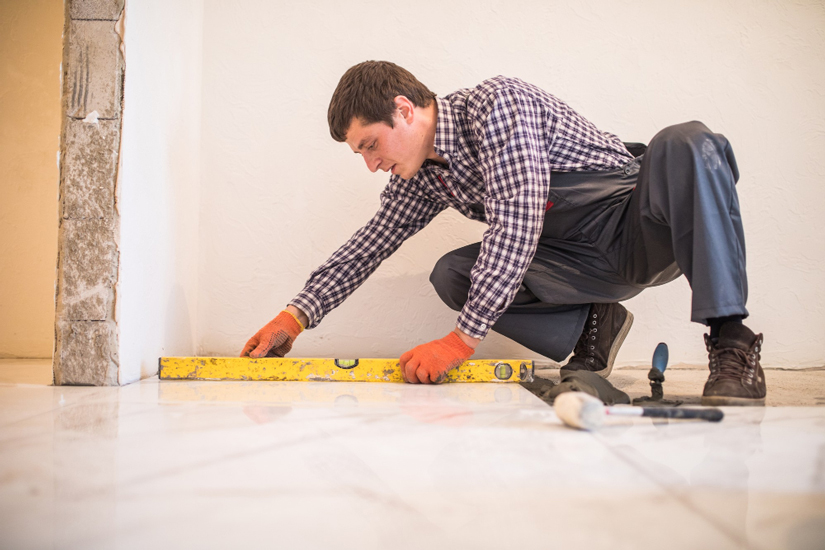
When you’re lifting up large format tiles, you need to be careful not to do any damage to yourself or the tile.
That’s where suction cups come in, a standard tool in the tiling world for managing weight and precision.
You can get all sorts of suction cups out there, each one suiting different tile sizes or weights:
- Single manual suction cups work alright for mid-size tiles
- Double or triple suction systems give you a bit more control and support
- Vacuum-pump suction cups are better for smooth surfaces like glass or finely textured porcelain
- Full-frame lifting systems are especially handy for oversized slabs or large format porcelain sheets
Using suction cups does more than just keep you safe, it also helps guide the tile gently into place, ensuring the adhesive ridges collapse evenly.
And this becomes even more critical when you’re installing tiles in areas that get a lot of water, like bathrooms or kitchens, where precision and uniformity really matter.
Now, there are a few common mistakes that can trip you up using suction cups, applying them to dusty tiles, lifting from one edge instead of supporting the tile evenly, or using worn-out pads that no longer grip securely.
So make sure you prep properly, and you’ll see a big difference in how safe and quality your installation is.
A Sensible Workflow For Large Format Tile Installation
A good workflow will help prevent loads of issues associated with large format tiles:
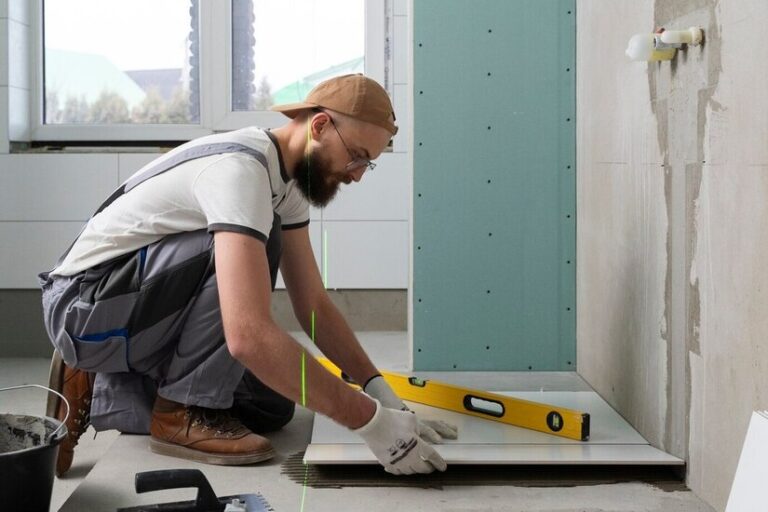
- Check the substrate flatness using a laser or straightedge
- Prepare and prime the surface according to the adhesive instructions
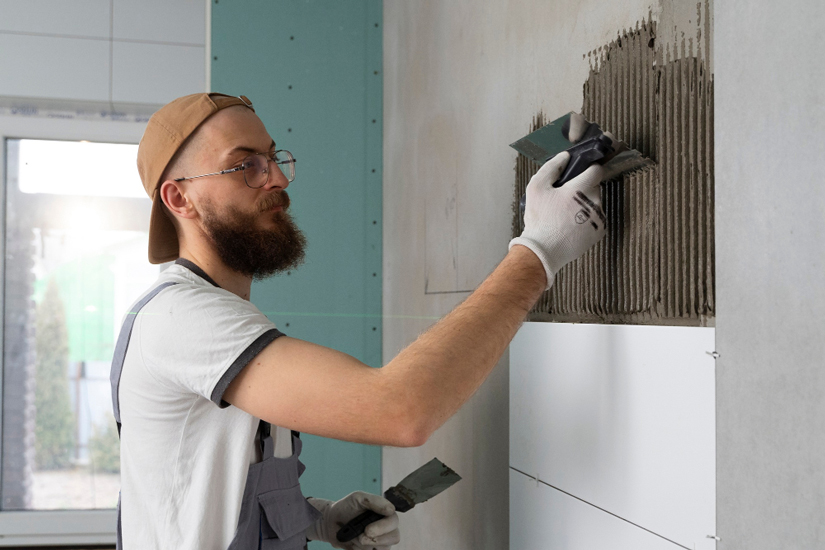
- Apply adhesive in one direction, allowing the ridges to collapse more smoothly
- Back-butter the tile, making sure you get a nice even contact
- Attach suction cups to get the tile lifting and placement under control
- Lower the tile carefully, sliding it gently to help get any air out from under it
- Lift the first tile installed to check how well the adhesive is doing
- Use alignment tools if you need them, to keep your joints looking nice and even
- Clean up as you go, because large tiles always make adhesive residue super visible
This sequence supports even bedding, reduces lippage, and increases the likelihood of long-term stability in both dry and wet environments.
Common Issues Installers Encounter
Even with good preparation, large format tiles introduce challenges:
- A hollow sound may indicate insufficient adhesive beneath a section.
- Corner lifting after curing can point to an uneven substrate.
- Suction cups slipping on textured porcelain often stem from dust or incorrect cup selection.
- Excess adhesive squeeze-out may signal an oversized trowel or poor technique.
- Bowed tiles, more common with longer planks, require careful ridge direction to mitigate rocking.
Recognizing these issues early can prevent callbacks and material waste.
Supporting Skill Development For Tradespeople
Modern trades require continuous adaptation to new materials and installation methods.
A resource like https://tradefoxapps.sitepreview.me offers a simulation environment where electricians, plumbers, and other tradespeople can improve their skills and explore complex scenarios without the hazards of a real site.
Access to practical, risk-free training supports better workmanship across the industry.
Bottom Line
Handling large format tiles demands precision at every stage, from choosing the right trowel to managing the tile during placement.
Proper back-buttering, appropriate suction systems, and a structured workflow significantly improve installation quality.
When these elements come together, the results speak for themselves: a stable, durable, and visually impressive finish suited for both residential and commercial environments.