
Ask any plasterer and they’ll tell you, drying time isn’t just about waiting around. It’s the difference between a perfect, smooth finish and a nightmare of cracks, peeling paint, or damp shadows under the surface.
In the UK, where the weather and humidity have a mind of their own, knowing how long plaster takes to dry is a mix of science, experience, and instinct.
Let’s break down what really affects the drying process, from room conditions to plaster thickness, heating habits, and that moment you can finally pick up a paint roller.
Setting Vs Drying: Two Very Different Things
Fresh plaster goes through two phases. The first is the setting, the chemical hardening that happens within a few hours. The second is drying, when moisture evaporates from the surface and deeper layers.
That second stage is where most mistakes happen. A newly plastered wall might feel solid but still hold plenty of moisture inside.
That’s why even a skimmed wall can take 2 to 5 days to dry, and thicker coats can take a week or more.
Temperature, airflow, humidity, and wall type all change that timeline. And rushing it, by turning up the central heating or closing the windows too soon, often backfires.
Average Plaster Drying Times By Type & Thickness
| Plaster Type | Typical Thickness | Average Drying Time | Notes |
|---|---|---|---|
| Skim Coat (Multi-Finish) | 2.3 mm | 2-3 days | Quickest drying: need airflow |
| Two-Coat (Bonding + FInish) | 10-12 mm | 5-7 days | Standard for most walls |
| Lime Plaster | 15-25 mm | 7-21 days | Slower, breathes naturally |
| Cement Render | 15-20 mm | 10-14 days | Must dry evenly to prevent cracks |
Room Type Makes A Difference
Not all rooms dry the same.
A living room or bedroom with steady warmth and airflow will give you ideal results, 2 days for skimmed walls, up to a week for deeper coats.
Kitchens and bathrooms are slower. Steam, poor ventilation, and cooler corners mean plaster holds moisture longer. Even with extractor fans, expect extra days to dry completely.
Basements or extensions with less insulation also take longer. If walls are cold to the touch, it’s a sign the drying process has more to go.
That’s why dry lining became common, it’s faster and avoids some moisture issues, but plasterboard still needs time before painting.
Mistakes That Ruin Drying Time
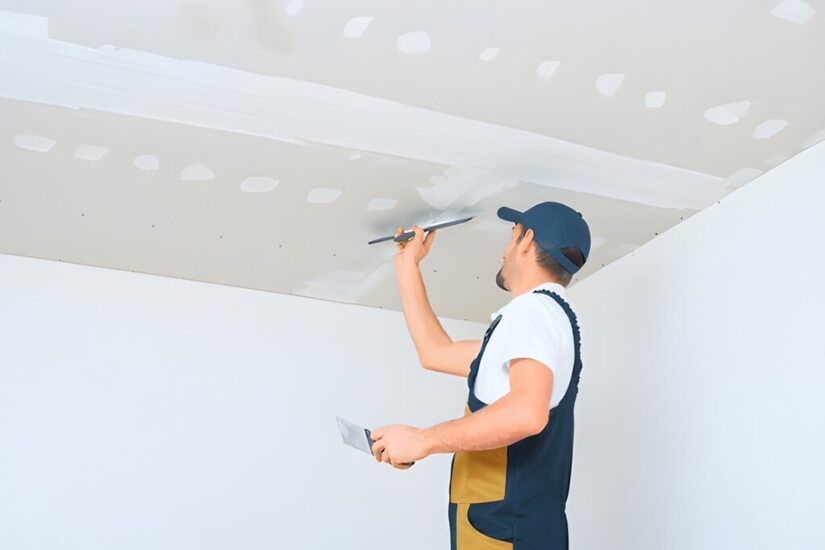
Most problems come from good intentions, people trying to speed things up.
Turning up the heat too early: Cranking the radiators or blasting heaters will dry plaster unevenly. The surface dries too quickly, trapping moisture inside. That leads to hairline cracks or darker patches later on.
Closing all windows and doors: Without airflow, moisture has nowhere to go. Condensation forms, slowing the process and risking mould.
Direct fans or dehumidifiers: High-speed drying stresses the material. It’s better to keep it gentle and consistent, a window slightly open, maybe a fan on low.
Painting too soon: If plaster isn’t pale pink and there are cool spots, it’s not ready. Paint seals moisture in, and that’s when you get bubbling or discoloured patches.
A good idea is to check the whole wall in natural light, not just the centre, but edges and corners, where moisture lingers longest.
When It’s Safe To Paint: Timing The Mist Coat Right
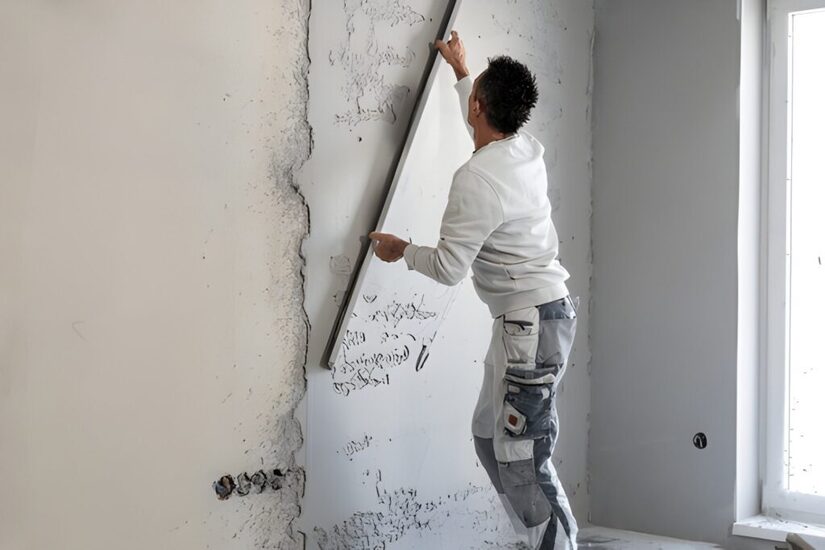
You’ve waited, the walls are pale pink, and it’s tempting to get the paint on. Don’t rush this step either.
Start with a mist coat, a 70:30 mix of matt emulsion and water. This seals the surface gently without blocking residual moisture.
Here’s a rough guide:
- Skimmed walls: 3–5 days before mist coat.
- Two-coat jobs: 7–10 days.
- Lime plaster: several weeks (it dries by carbonation, not evaporation).
Avoid vinyl or silk paints early on; they don’t breathe. Use basic matt emulsion for your first coat. Only once that’s fully dry can you apply decorative finishes.
How Weather Changes Everything
UK weather adds another variable.
Winter drying:
- Central heating helps, but don’t turn it too high.
- Keep a small gap in windows and doors for airflow.
- Expect slower progress, up to twice the normal time.
Summer drying:
- Faster, but riskier if direct sunlight hits fresh plaster. It can dry the surface too quickly, causing shrinkage cracks.
- Cover windows if sunlight beams directly on the wall.
Gentle, consistent drying wins every time.
A Balanced Way To Speed Up Drying Without Hurting The Plaster
You can end up helping your plaster to dry without messing it up.
- Keep the room at a steady temp, around 18 to 22 degrees Celsius - that's what we're aiming for.
- Use some gentle fans or dehumidifiers. Don't try to blast the plaster with them on full, use low speed instead.
- Avoid pointing the fan straight at the wall, that's just going to make it worse.
- Have a crack open windows and doors so that you can let some of the damp air out of the room.
The key is to help the plaster along, not try to force it to dry. If you let it dry too quickly, it’ll weaken, and then you’ll have trouble with it later on. You want to let it dry at its own pace so it ends up with a surface that’s strong and long-lasting.
Frequently Asked Questions
How long does it take for newly plastered walls to dry before I can start painting?
Usually it’s 5 to 7 days, but it can be up to 10 if it’s cold or damp.
Can you use central heating to try and speed up the drying process?
Yeah, you can – but just be gentle. Keep the radiators on low and don’t try to do any sudden temperature changes.
What if the plaster dries unevenly?
It’ll probably sort itself out in the end. Dark patches near the corners or sockets are pretty normal when you’re just starting.
Do I need to seal with PVA before I can start painting?
No, not if it’s fresh plaster. That’d just trap the moisture. Just start with a mist coat and let it dry before you start painting.
A Quick Word On Getting It Right
Even if you’re an old hand at plastering, this is still one of those trades that requires a bit of patience.
Every single room, wall and mix is going to behave slightly differently. Trying to rush the drying process just means you’ll have to do more work to fix the problems later on.
If you want to get a bit more practice in and you don’t want to mess up your own place, TradeFox is a good option.
They’ve got tools for plasterers and builders that let you simulate real drying conditions without causing a mess or risking your own property.
Bottom Line
So, how long does plaster take to dry? Well, it’s all down to the room conditions, the thickness of the plaster, and how well you manage to keep things flowing and warm.
But the one thing that’s always true is that even a good plaster job needs a bit of space to breathe.
Whether it’s a spot of skimming in a warm lounge or a full re-plaster in a damp kitchen, keeping things steady, with a bit of airflow and the right amount of patience, is really what makes all the difference between a good wall and a great one.