



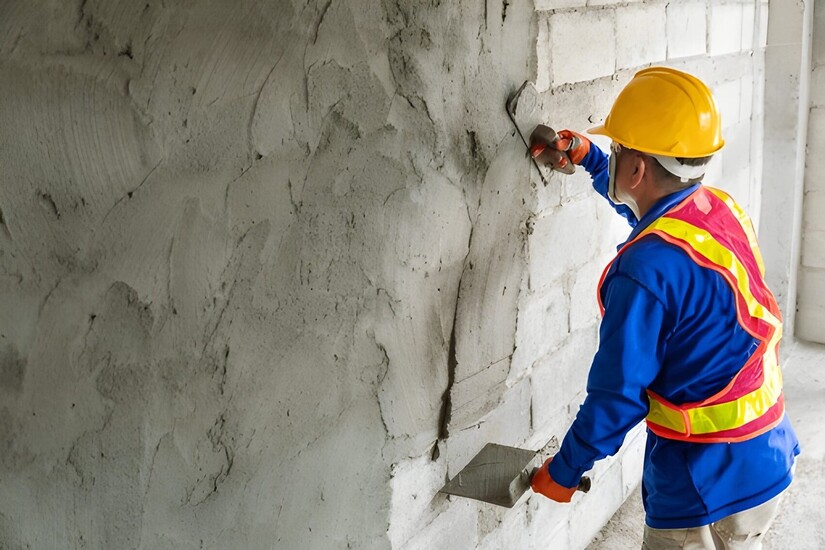
Ask any plasterer and they’ll tell you, drying time isn’t just about waiting around. It’s the difference between a perfect, smooth finish and a nightmare of cracks, peeling paint, or damp shadows under the surface.
In the UK, where the weather and humidity have a mind of their own, knowing how long plaster takes to dry is a mix of science, experience, and instinct.
Let’s break down what really affects the drying process, from room conditions to plaster thickness, heating habits, and that moment you can finally pick up a paint roller.
Setting Vs Drying: Two Very Different Things
Fresh plaster goes through two phases. The first is the setting, the chemical hardening that happens within a few hours. The second is drying, when moisture evaporates from the surface and deeper layers.
That second stage is where most mistakes happen. A newly plastered wall might feel solid but still hold plenty of moisture inside.
That’s why even a skimmed wall can take 2 to 5 days to dry, and thicker coats can take a week or more.
Temperature, airflow, humidity, and wall type all change that timeline. And rushing it, by turning up the central heating or closing the windows too soon, often backfires.
Average Plaster Drying Times By Type & Thickness
| Plaster Type | Typical Thickness | Average Drying Time | Notes |
|---|---|---|---|
| Skim Coat (Multi-Finish) | 2–3 mm | 2-3 days | Quickest drying: need airflow |
| Two-Coat (Bonding + Finish) | 10-12 mm | 5-7 days | Standard for most walls |
| Lime Plaster | 15-25 mm | 7-21 days | Slower, breathes naturally |
| Cement Render | 15-20 mm | 10-14 days | Must dry evenly to prevent cracks |
Drying Times By Plaster Type And Situation: What The Manufacturers Say
The figures above are rules of thumb. The table below pulls together what plaster manufacturers and UK trade guides actually publish. Manufacturers give firm setting times, but they rarely put a number on drying time, because that depends on the site. What they all agree on is that gypsum plaster must be thoroughly dry before you decorate, and that a permeable paint (a mist coat) is the only thing that should go on in the meantime.
| Plaster / situation | Typical thickness | Setting time (manufacturer) | Typical wait before decorating |
|---|---|---|---|
| Multi-finish skim over a backing coat (e.g. Thistle MultiFinish) | About 2 mm, applied in two passes | About 1.5 hours | 3–7 days in a warm, ventilated room. A Saint-Gobain plaster specialist quoted by Homebuilding puts it at 2–4 days in good conditions. |
| Skim over new plasterboard (e.g. Thistle BoardFinish) | About 2 mm, applied in two passes | About 1.5 hours | Usually the quick end of the skim range, as there’s no wet backing coat behind it. Still wait for an even colour. |
| Bonding or hardwall undercoat (e.g. Thistle HardWall) | About 11 mm per coat (machine-applied work normally no more than 25 mm in total) | About 1.5–2 hours | Normally skimmed once set, not decorated. Undercoats take roughly 4–14 days to dry fully. British Gypsum notes HardWall dries from the surface inwards, so it can look dry while still damp deeper down. |
| One-coat plaster (e.g. Thistle Universal One Coat) | Up to 13 mm on walls and 10 mm on ceilings per application | At least 90 minutes | No manufacturer figure. It’s much thicker than a skim, so expect undercoat-type drying times and check with the tests below. |
| Full re-plaster (undercoat plus finish coat) | About 11–13 mm in total | Undercoat and finish set separately | Up to around 4 weeks. Knauf’s guidance for its MP75 machine plaster is about 2 weeks with good ventilation, decorating once moisture content is below 20%. |
| Cement-based backing coat (e.g. Thistle DriCoat for damp-proofing work) | Up to 11 mm | At least 24 hours | Needs at least 24 hours (longer in cold or damp weather) before the finish coat goes on. British Gypsum says not to decorate directly onto it, and cement-based undercoats need far longer to dry than gypsum ones. |
| Traditional lime plaster (scratch, float and finish coats) | Several coats | Lime cures slowly rather than setting | Allow around 2 weeks after the scratch coat and about a week after the floating coat before the next coat. Then 4–6 weeks before clay paints, or 4–8 weeks before silicate paints. Limewash can go on sooner. |
What Changes These Times
- Thickness: thin skims dry fastest, and thick undercoats and one-coat plasters hold water for much longer.
- Temperature: warmth speeds drying, and cold slows it. Never plaster onto a frozen background, and stop the work freezing after it’s applied.
- Humidity: damp air, wet weather and a damp background all slow drying.
- Ventilation: moving air carries the moisture away. Open windows and doors where you can. Avoid blasting heat or direct sun at fresh gypsum plaster, because losing water too quickly weakens it and can cause cracking.
- Background: high-suction backgrounds shorten working and finishing times, and cold weather extends them.
For the plasters themselves, see our guides to multi-finish plaster and bonding plaster.
Room Type Makes A Difference
Not all rooms dry the same.
A living room or bedroom with steady warmth and airflow will give you ideal results, 2 days for skimmed walls, up to a week for deeper coats.
Kitchens and bathrooms are slower. Steam, poor ventilation, and cooler corners mean plaster holds moisture longer. Even with extractor fans, expect extra days to dry completely.
Basements or extensions with less insulation also take longer. If walls are cold to the touch, it’s a sign the drying process has more to go.
That’s why dry lining became common, it’s faster and avoids some moisture issues, but plasterboard still needs time before painting.
Mistakes That Ruin Drying Time
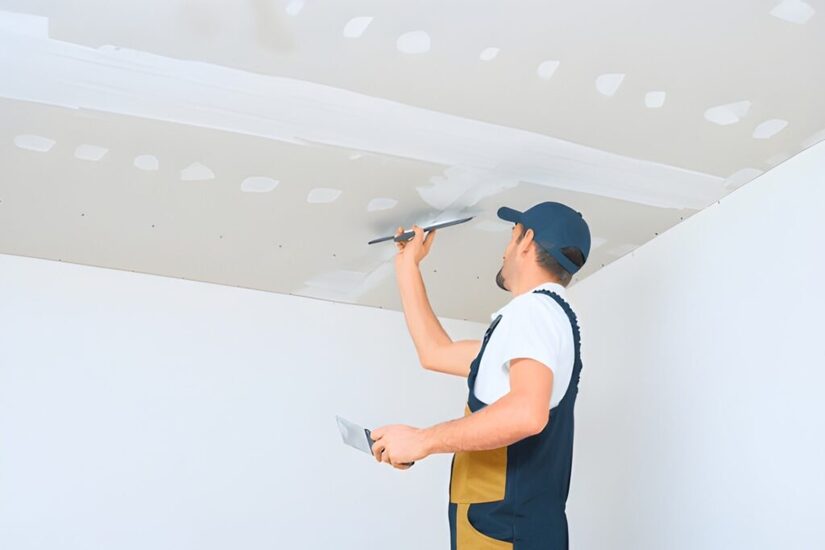
Most problems come from good intentions, people trying to speed things up.
Turning up the heat too early: Cranking the radiators or blasting heaters will dry plaster unevenly. The surface dries too quickly, trapping moisture inside. That leads to hairline cracks or darker patches later on.
Closing all windows and doors: Without airflow, moisture has nowhere to go. Condensation forms, slowing the process and risking mould.
Direct fans or dehumidifiers: High-speed drying stresses the material. It’s better to keep it gentle and consistent, a window slightly open, maybe a fan on low.
Painting too soon: If plaster isn’t pale pink and there are cool spots, it’s not ready. Paint seals moisture in, and that’s when you get bubbling or discoloured patches.
A good idea is to check the whole wall in natural light, not just the centre, but edges and corners, where moisture lingers longest.
When It’s Safe To Paint: Timing The Mist Coat Right
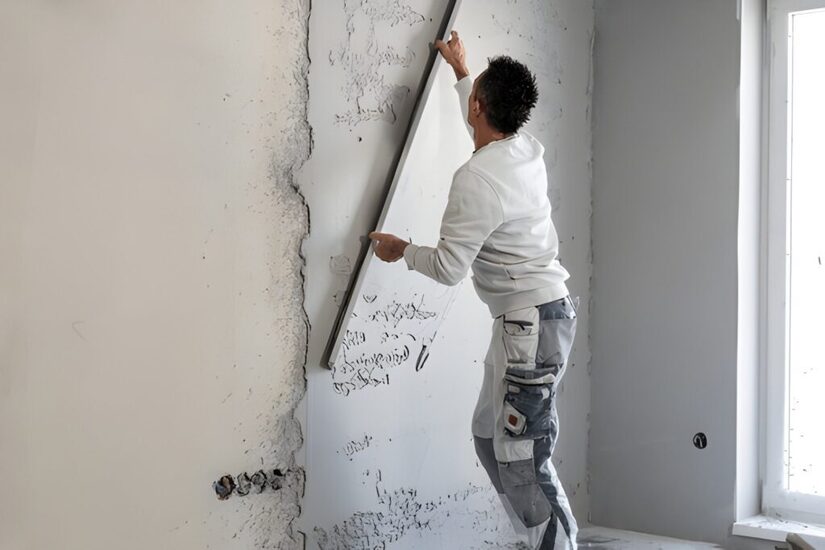
You’ve waited, the walls are pale pink, and it’s tempting to get the paint on. Don’t rush this step either.
Start with a mist coat, a 70:30 mix of matt emulsion and water. This seals the surface gently without blocking residual moisture.
Here’s a rough guide:
- Skimmed walls: 3–5 days before mist coat.
- Two-coat jobs: 7–10 days.
- Lime plaster: several weeks (it dries by carbonation, not evaporation).
Avoid vinyl or silk paints early on; they don’t breathe. Use basic matt emulsion for your first coat. Only once that’s fully dry can you apply decorative finishes.
How To Tell Plaster Is Dry
- Colour: gypsum finish plaster starts a darker brown and dries to an even, light pink. Darker patches are still wet. Wait until the colour is the same across every wall.
- Feel: dry plaster feels hard and at room temperature. If it feels cool or slightly soft, it’s still giving off moisture.
- Surface: a dry wall looks matt and even. Shiny or blotchy areas are still wet.
- Moisture meter: on thick coats, take a reading rather than trusting the surface, because plaster can dry on the face while it’s still damp underneath. Knauf’s guidance for its MP75 machine plaster is a moisture content below 20% before decorating. Check your meter’s instructions for its gypsum or plaster setting.
When it passes these checks, start with a permeable mist coat. Hold back vinyl paints, tiles and other impermeable finishes until both the plaster and the wall behind it are fully dry.
How Weather Changes Everything
UK weather adds another variable.
Winter drying:
- Central heating helps, but don’t turn it too high.
- Keep a small gap in windows and doors for airflow.
- Expect slower progress, up to twice the normal time.
Summer drying:
- Faster, but riskier if direct sunlight hits fresh plaster. It can dry the surface too quickly, causing shrinkage cracks.
- Cover windows if sunlight beams directly on the wall.
Gentle, consistent drying wins every time.
A Balanced Way To Speed Up Drying Without Hurting The Plaster
You can end up helping your plaster to dry without messing it up.
- Keep the room at a steady temp, around 18 to 22 degrees Celsius - that's what we're aiming for.
- Use some gentle fans or dehumidifiers. Don't try to blast the plaster with them on full, use low speed instead.
- Avoid pointing the fan straight at the wall, that's just going to make it worse.
- Keep windows and doors cracked open so that you can let some of the damp air out of the room.
The key is to help the plaster along, not try to force it to dry. If you let it dry too quickly, it’ll weaken, and then you’ll have trouble with it later on. You want to let it dry at its own pace so it ends up with a surface that’s strong and long-lasting.
Frequently Asked Questions
How long does it take for newly plastered walls to dry before I can start painting?
Usually it’s 5 to 7 days, but it can be up to 10 if it’s cold or damp.
Can you use central heating to try and speed up the drying process?
Yeah, you can – but just be gentle. Keep the radiators on low and don’t try to do any sudden temperature changes.
What if the plaster dries unevenly?
It’ll probably sort itself out in the end. Dark patches near the corners or sockets are pretty normal when you’re just starting.
Do I need to seal with PVA before I can start painting?
No, not if it’s fresh plaster. That’d just trap the moisture. Just start with a mist coat and let it dry before you start painting.
A Quick Word On Getting It Right
Even if you’re an old hand at plastering, this is still one of those trades that requires a bit of patience.
Every single room, wall and mix is going to behave slightly differently. Trying to rush the drying process just means you’ll have to do more work to fix the problems later on.
If you want to get a bit more practice in and you don’t want to mess up your own place, Tradefox is a good option.
They’ve got tools for plasterers and builders that let you simulate real drying conditions without causing a mess or risking your own property.
Bottom Line
So, how long does plaster take to dry? Well, it’s all down to the room conditions, the thickness of the plaster, and how well you manage to keep things flowing and warm.
But the one thing that’s always true is that even a good plaster job needs a bit of space to breathe.
Whether it’s a spot of skimming in a warm lounge or a full re-plaster in a damp kitchen, keeping things steady, with a bit of airflow and the right amount of patience, is really what makes all the difference between a good wall and a great one.