



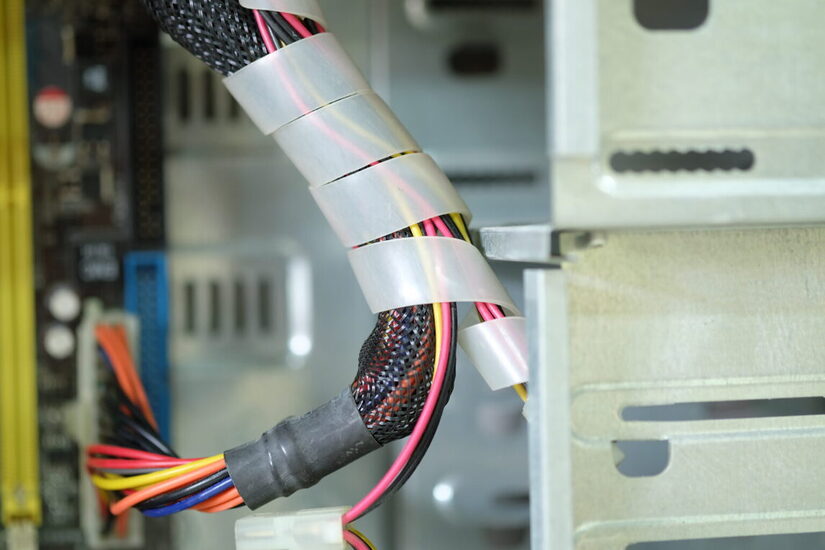
Walk into any British home built before the mid-2000s, unscrew a socket faceplate, and you might find something surprising: wiring colours that don’t match what you’ve seen on diagrams.
Red, black, and plain green instead of the brown, blue, and green/yellow that most electricians expect today. That’s not a mistake. It’s history, hidden in the walls.
Understanding wiring colours in the UK isn’t just a technicality, it’s a matter of safety, regulatory compliance, and, frankly, keeping things from going boom when they shouldn’t.
Whether you’re swapping a light fitting or tracing a fault in an older fuse board, knowing what the colours mean can be the difference between doing the job right and doing damage.
This guide cuts through the jargon and gives you the real-world, no-nonsense breakdown of British wiring colours, old and new, so you can work safely, confidently, and in line with current UK standards.
The harmonised colours arrived with BS 7671:2001 Amendment 2 in 2004. Old or new colours could be used for new work until 31 March 2006 (never both on the same job), and from then on only the new colours were allowed.
| Circuit | Conductor | Old UK colour (before 2004) | Current harmonised colour |
|---|---|---|---|
| Single-phase | Line (live) | Red | Brown |
| Single-phase | Neutral | Black | Blue |
| Single-phase | Protective conductor (earth) | Green-and-yellow | Green-and-yellow (unchanged) |
| Three-phase | L1 | Red | Brown |
| Three-phase | L2 | Yellow | Black |
| Three-phase | L3 | Blue | Grey |
| Three-phase | Neutral | Black | Blue |
| Three-phase | Protective conductor (earth) | Green-and-yellow | Green-and-yellow (unchanged) |
Watch out on three-phase: under the old colours blue was a phase and black was neutral, but under the new colours black is a phase and blue is neutral. Where old and new three-phase colours meet, BS 7671 requires cores to be marked L1, L2, L3 and N, and a caution notice should be fitted at the consumer unit or distribution board. Sources: IET, NBS, NICEIC/Voltimum.
Why Wiring Colours Aren’t Just Cosmetic
Let’s get one thing straight: wire colours aren’t chosen at random, and they’re not for aesthetics. They’re a safety system. A visual code. Think of them like road signs for electricians, clear signals about which wires carry current, which are safe to touch (relatively), and which could ruin your day if misjudged.
Misidentifying a wire, especially in older homes where systems may be a patchwork of eras, can cause:
- Electrical shock
- Short circuits
- Fire hazards
- Expensive rework
So yes, getting the colour right is a big deal. More than just ticking a box, it’s about staying alive and keeping your clients safe.
A Quick Overview: New Vs. Old UK Wiring Colours
Post-2006 (Current Standard)
| Wire Function | Colour (New Standard) |
| Live | Brown |
| Neutral | Blue |
| Earth (CPC) | Green/Yellow Stripe |
Pre-2006 (Old British Colours)
| Wire Function | Colour (Old Standard) |
| Live | Red |
| Neutral | Black |
| Earth CPC | Green/Yellow Stripe (Solid Green pre-1977) |
The shift came in 2006 to align UK wiring colours with European harmonised colours. Not the most thrilling origin story, but a necessary one.
The idea was to create consistency across countries and reduce confusion for electricians working across borders.
But here’s the catch: older wiring hasn’t magically changed. Loads of UK homes still have red and black cables lurking under floorboards and behind plasterboard. If you’re working on one, knowing both systems is non-negotiable.
Single-Phase Wiring (The Standard In UK Homes)
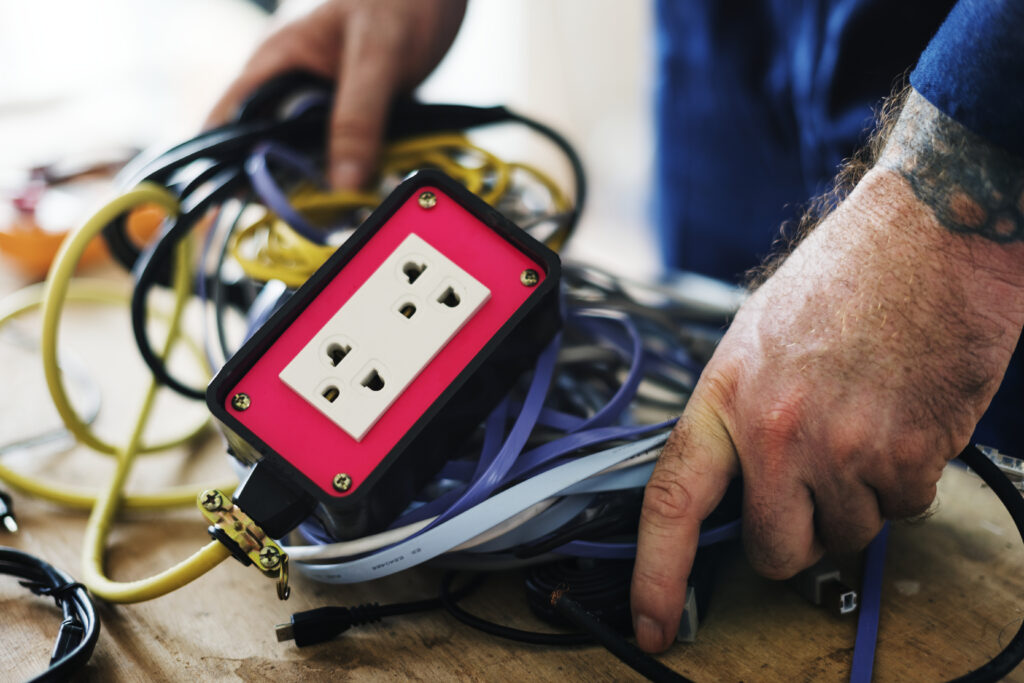
Most residential properties in the UK run on a single-phase supply. That means you’ll generally see three wires in your average lighting or power circuit:
- Live (Brown) – Carries current to the appliance or fitting.
- Neutral (Blue) – Carries current away.
- Earth (Green/Yellow) – Safety path to ground.
If you’re working in a post-2006 installation, this setup is your bread and butter. But things get more interesting in older homes.
Working With Legacy Wiring: Red, Black & Green
Open up a junction box in a 1980s bungalow, and you’re likely to see:
- Red = Live
- Black = Neutral
-
Green / Yellow Stripe (Or solid green if pre-1977) = Earth
Now here’s where people trip up: that old black wire isn’t an earth. It’s the neutral. Mistaking it for modern black (which is now a live phase in three-phase systems) could lead to some expensive and dangerous assumptions.
Also worth noting: some properties may be partly updated, creating a Frankenstein’s monster of wiring schemes. If brown and red live wires are both in the same circuit? Red flag. That circuit needs a full rethink, not just a patch job.
Three-Phase Wiring: Commercial And Industrial Setups
Domestic jobs are usually single-phase, but once you’re in commercial units, workshops, or any building with hefty power needs, three-phase wiring enters the chat.
Here’s how it breaks down today:
| Phase | Colour |
|---|---|
| L1 | Brown |
| L2 | Black |
| L3 | Grey |
| Neutral | Blue |
| Earth (CPC) | Green / Yellow |
What’s tricky here is that black is a live wire in three-phase systems, not a neutral like in older single-phase setups. That one mix-up? Yeah, it’s enough to cause major headaches, or worse.
Always test. Always confirm. Never assume.
How To Identify What You’re Dealing With?
- Date of installation: If it’s pre-2006 and hasn’t been rewired, expect the old scheme.
- Cable markings: Some newer cables have printed year/date stamps.
- Visual cues: Twin & Earth cable with red/black cores = old. Brown/blue = modern.
Still unsure? Use a voltage tester and circuit identifier. Never base your entire wiring logic on colours alone. A visual guess is just that, a guess. And in this line of work, guessing is a terrible idea.
Safety First: Best Practices For Electrical Work
You don’t need a full rewire to justify brushing up on safe wiring practices. Here are a few essentials that apply whether you’re replacing a socket or investigating a blown fuse:
- Power off at the consumer unit. Always.
- Lockout/tagout, so no one can flick the switch on while you’re working.
- Use a GS38 Compliant Voltage indicator to verify that circuits are dead.
- Wear rubber-soled shoes and use insulated tools.
- Label wires if you’re removing more than one. Your future self will be grateful.
One more thing: If you’re not qualified, leave it alone. Certain types of electrical work in the UK must legally be carried out, or at least certified, by a registered professional under Part P of the Building Regulations.
Common Wiring Mistakes (And How To Dodge Them)
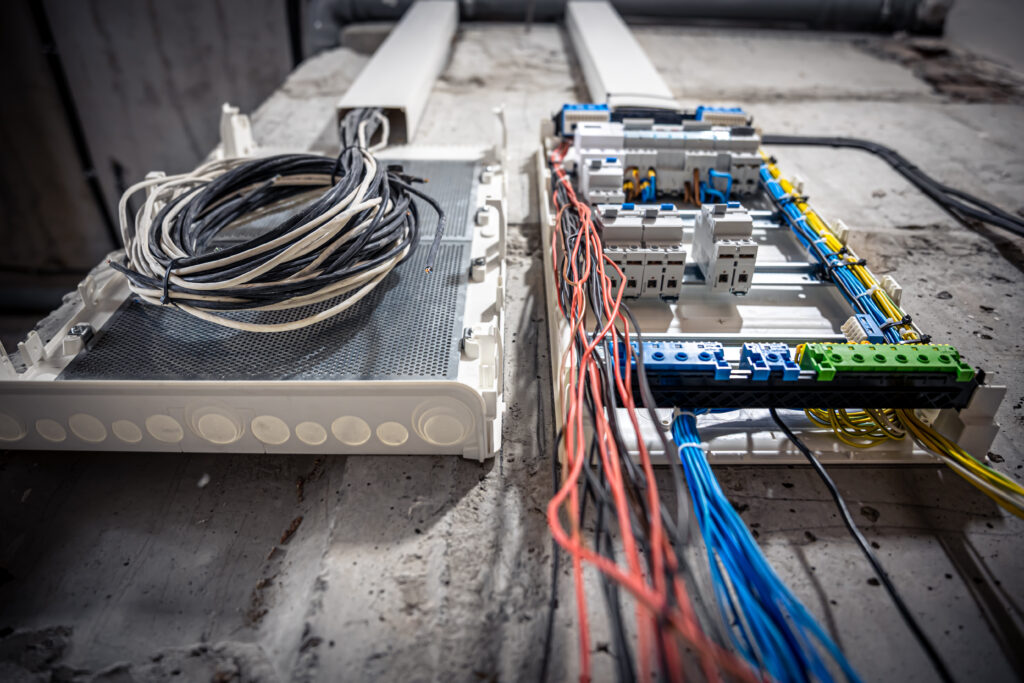
Even experienced tradespeople can get caught out. Here’s a shortlist of common wiring colour pitfalls:
- Assuming all blue wires are neutral – In older or mixed systems, that’s not a safe assumption. In UK lighting circuits, a blue wire is frequently used as a 'switched live' (it should legally have brown tape/sleeving on it, but lazy fitters often forget).
- Failing to properly label mixed circuits – It is perfectly legal to extend an old red/black circuit with new brown/blue cable. However, failing to sleeve the conductors at the interface and omitting a 'Caution: Mixed Wiring Colours' warning label at the consumer unit is a regulatory breach.
- Skipping proper identification – Just because a wire "looks" like an earth doesn’t mean it is.
- Ignoring label needs for colour-blind colleagues – Label wires clearly; don’t rely on colour alone.
Quick fix? Use coloured insulation tape to clearly mark conductors during upgrades or repairs.
Label Everything. Seriously.
Here’s a detail too many skip: label your wires.
Whether you’re updating wiring or replacing a switch, taking 30 seconds to label conductors saves future time and avoids confusion. Especially useful in:
- Junction Boxes
- Ceiling Roses
- Multi-gang switches
Also, keep a wiring diagram for anything complex. A little sketch on the back of a socket faceplate can go a long way.
When To Bring In A Professional
Some jobs aren’t meant to be DIY, no matter how many how-to videos you’ve watched.
Call a qualified electrician if:
- You’re rewiring part of a property
- Working near the consumer unit
- Handling a three-phase supply
- There’s visible burning or damage in a junction box
- You’re unsure what’s going on
Look for NICEIC or NAPIT-registered professionals. Don’t just go for the cheapest quote; check credentials, reviews, and if they understand the regs inside and out.
Need A Safe Way To Practise First?
If you’re learning the ropes or even brushing up on your skills, there’s a safer way to get hands-on without, well, electrocuting yourself.
Check out Tradefox, a simulation app built for UK tradespeople like electricians and plumbers. It’s a clever, risk-free way to practise real-world scenarios, troubleshoot wiring layouts, and level up without ever lifting a screwdriver.
Worth a look if you’re serious about improving your practical edge.
Practise this in a simulation
Practise identifying conductors and wiring circuits correctly on a virtual installation.
Final Thoughts
British wiring colours aren’t just codes, they’re a crucial safety language. Misunderstanding them, especially across the old vs. new divide, can lead to costly mistakes and dangerous outcomes.
Whether you’re a professional on-site or a DIYer at home, the best tool in your kit is knowledge. Know the colours. Know the history. And above all, know your limits.
Electrical work isn’t about bravado. It’s about caution, clarity, and keeping current in more ways than one.


