



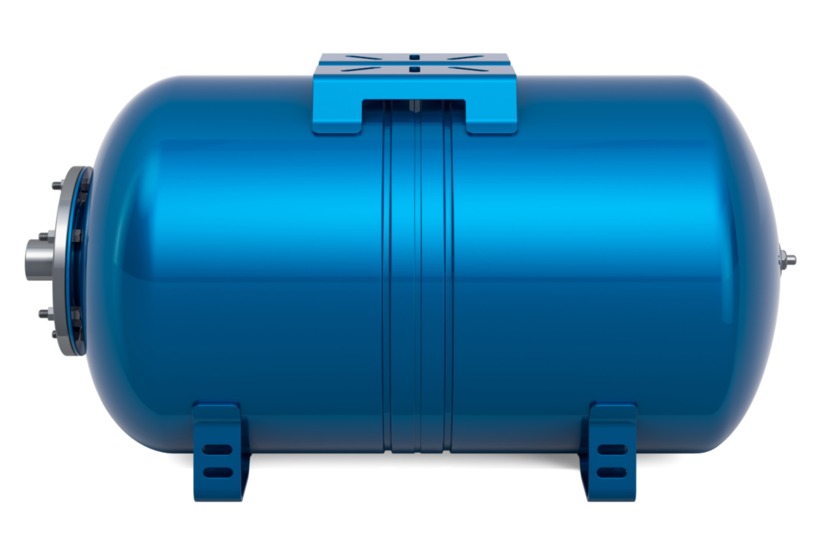
An expansion vessel absorbs the extra water volume that appears when a sealed heating system heats up. Pre-charge, diaphragm condition and system pressure are not three separate topics. They are one chain. When the pre-charge is wrong or the diaphragm fails, the boiler pressure is the first thing to move, and reading that movement correctly is what separates a proper diagnosis from a parts-swap guess.
Water expands by roughly 4 per cent when heated from around 10°C to 80°C. In a sealed system that extra volume has nowhere to go except into the vessel. If the vessel cannot take it, pressure climbs, the safety valve lifts, and you get the call-out. This guide walks through how the three factors interact, how to test properly, and where the work sits under UK regulation.
What Is an Expansion Vessel and How Does It Work?
An expansion vessel is a steel pressure vessel split into two chambers by a flexible rubber diaphragm:
- Gas side. Holds a dry charge of nitrogen or air, set to a known pre-charge pressure.
- Water side. Connects to the system water and fills as the water expands.
When water heats and expands, it pushes against the diaphragm and compresses the gas. That compression stores the expansion until the system cools or a draw-off releases it. Done correctly, there is no relief valve discharge, no pressure hammer, and no gauge that swings wildly on every firing cycle.
The component rarely works alone. On a sealed central heating system the vessel is sized to BS 7074 or BS EN 12828 and made to BS EN 13831. On an unvented hot water cylinder it forms one part of a safety group required under Approved Document G3 of the Building Regulations, alongside a pressure-reducing valve, an expansion (check) valve and a temperature-and-pressure relief valve. Understanding that the vessel sits inside a wider system is central to diagnosis.
Why Pre-Charge Pressure Matters
Pre-charge pressure is the gas-side pressure in the dry chamber, set before the system is filled. It is the reference point the whole vessel works from. Get it wrong and the vessel cannot absorb expansion correctly, no matter how healthy the diaphragm is.
Setting Pre-Charge on a Sealed Heating System
The principle in BS 7074 is that pre-charge should match the cold fill pressure of the system, then be adjusted upward for static head. In practice:
- Vessel at the top of the system. Pre-charge roughly equals the cold fill pressure (often in the region of 1 bar on a typical domestic system).
- Vessel mounted low, with height above it. Add the static head. As a rough guide, every 10 metres of water column above the vessel adds about 1 bar.
- Always defer to the data plate. The sticker on the vessel gives the design figure for that unit. Treat it as the authority, not a rule of thumb.
Setting Pre-Charge on an Unvented Cylinder
The factory-fitted vessel on an unvented cylinder carries a higher pre-charge, commonly matched to the pressure-reducing valve, so figures around 3.0 to 3.5 bar are typical. Heating and unvented vessels are different animals and the figures are not interchangeable.
The Two Pre-Charge Failure Modes
- Slow charge loss. Gas permeates through the rubber over years. This is exactly why nitrogen is preferred to air where the vessel allows it, as it permeates more slowly and holds the charge longer.
- Wrong charge at install. A vessel set to the wrong figure on day one stresses the diaphragm from the start and shortens its working life.
How Low Pre-Charge Affects System Pressure
When pre-charge drops below spec, the diaphragm sits too far into the gas side even when the system is cold. There is less gas cushion available, so as the water heats the pressure rises faster and higher than it should. The usual signature is a cold pressure that looks acceptable but a hot pressure that climbs towards the relief valve setting, often lifting the valve and dumping water. The system then reads low when it cools, the customer tops it up, and the cycle repeats.
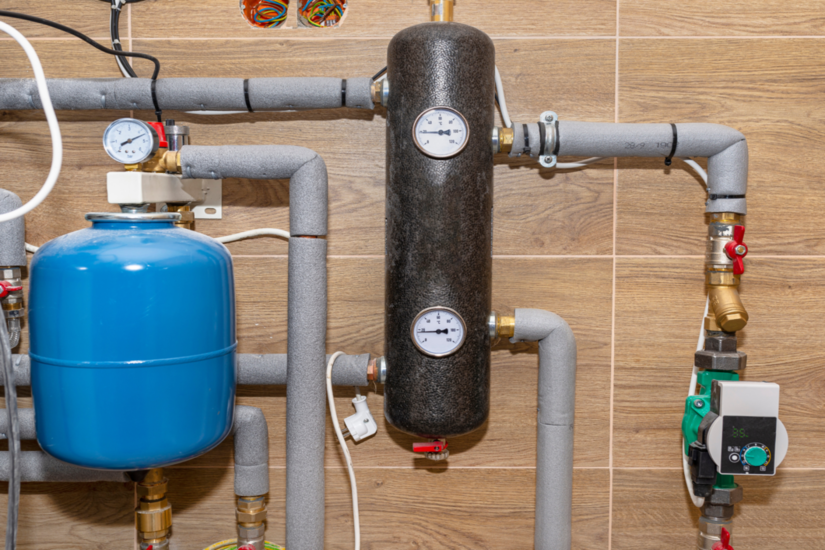
What Does Diaphragm Failure Look Like?
Diaphragm failure is when the rubber membrane splits, perishes or hardens so that it no longer separates gas from water. Once that happens the vessel floods, becomes waterlogged, and loses all ability to absorb expansion.
The signs on site are consistent:
- Boiler pressure rising sharply once the system is hot, often pushing past the relief valve setting.
- The pressure relief valve discharging on most heating cycles.
- A gauge that jumps noticeably every time the boiler fires.
- Constant topping up because pressure drops away when the system cools.
- Water escaping from the Schrader valve when the cap is removed.
That last point is the clearest confirmation. The gas side should be dry. If water comes out of the Schrader (air) valve, the diaphragm has perforated and the vessel is finished. No amount of re-pressurising will fix a torn membrane, and pumping it up only pushes water back through the tear for a short while.
Waterlogging Without a Torn Diaphragm
Not every waterlogged vessel has a failed diaphragm. If the pre-charge has been lost but the membrane is still intact, the vessel fills with water and behaves as if it has failed, yet it can often be recharged rather than replaced.
This distinction matters on every job:
- Intact diaphragm, lost charge. Can be re-pressurised. A quick recharge.
- Torn diaphragm. Cannot be repaired. Replacement only.
Confirming which one you have is the difference between a fifteen-minute recharge and a full system drain-down.
Diagnosing on Site: The Practical Sequence
Diagnosis is a sequence, not a single check. Follow it in order and the fault usually declares itself quickly.
- Watch the gauge through a full heating cycle. Note the cold pressure, fire the system, and watch what happens as it comes up to temperature. A steady, modest rise is healthy. A sharp climb towards the relief setting points at the vessel.
- Isolate the vessel and release the water side. With the water side depressurised, the diaphragm can fully collapse and give a true reading.
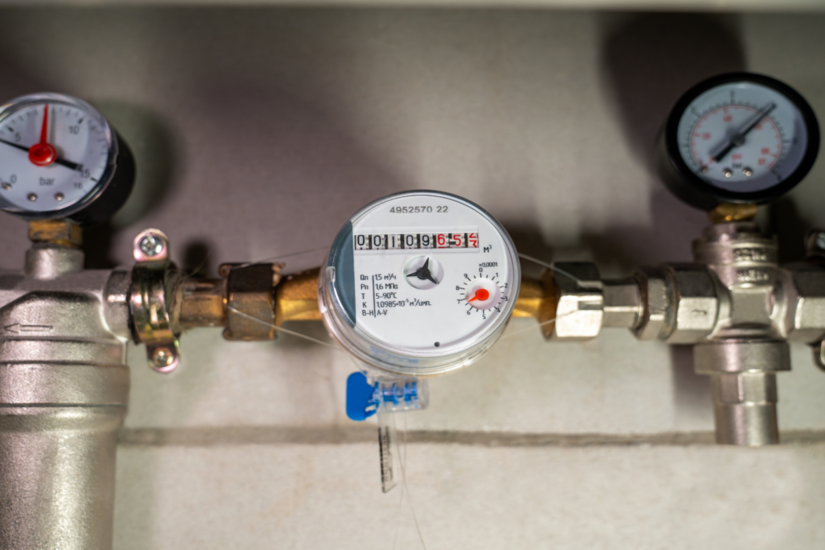
- Gauge the Schrader valve. Use a calibrated low-pressure gauge. Reading the pre-charge with system water still pressing on the diaphragm gives a false, inflated figure, which is a common mistake.
- Interpret the result. Correct pre-charge and healthy behaviour points elsewhere in the system. Low pre-charge with a dry valve means lost charge, and if the diaphragm is sound it can be recharged. Water at the valve confirms diaphragm failure and replacement.
A tap test can support the picture. A healthy vessel sounds hollow near the top and solid lower down. A vessel that sounds solid throughout is likely waterlogged. Treat this as a supporting indicator, never a substitute for gauging the Schrader valve.
Recharging Versus Replacing an Expansion Vessel
The rule is simple:
- Recharge when the diaphragm is intact and the vessel has only lost pressure.
- Remplacer when the diaphragm has torn, or the body is corroded or otherwise beyond service.
The Schrader valve test tells you which.
To recharge: isolate the vessel, drain the water side to release pressure, then top up the gas side to the manufacturer’s figure using a hand pump, foot pump, or a compressor with a calibrated low-pressure gauge. Bring the system back to its correct cold fill pressure and monitor through a full heating cycle to confirm the pressure now settles where it should.
To replace: check and adjust the new unit to the correct pre-charge before fitting, as factory settings are not always right for the specific system. Size it to the system volume, operating temperature and pressure rather than simply matching whatever was there, since undersized vessels are a frequent cause of repeat failures. On sealed heating systems, fitting the vessel on the return side near the pump suction gives more stable operation.
Where This Work Sits Under UK Regulation
Sealed Heating Systems
Vessels should be selected and installed with reference to BS 7074 and BS EN 12828, using units made to BS EN 13831. These standards cover sizing, pre-charge and positioning, and they are the reference point building control and specifiers expect.
Unvented Hot Water Systems
Unvented work is stricter, and for good reason. Stored water sits at mains pressure and can flash to steam if the controls fail, so the discharge pipework from the temperature-and-pressure relief valve and the expansion relief valve carries scalding water and must be arranged to discharge safely to a visible, safe location. This is competent-person-only work:
- Any storage vessel over 15 litres without a vent pipe to atmosphere falls under Approved Document G3.
- Only a competent person holding a recognised unvented hot water qualification may install, service or repair it. Common routes include the BPEC or Logic Hot Water Systems and Safety (HWSS) certificate and the City & Guilds unvented award. The competency card is renewed every five years.
- Every G3 installation must be notified to Building Control, which registered installers do by self-certifying through a Competent Person Scheme such as WaterSafe, APHC or BESCA.
- Failing to notify is an offence under the Building Act 1984.
The practical takeaway for anyone working towards the trade: you can work on a sealed heating vessel with general plumbing and heating competence, but you cannot legally touch the vessel on an unvented cylinder without the G3 ticket. If you are building a career in domestic heating, that qualification is not optional.
Understanding when to recharge or replace an expansion vessel starts with reading pressure correctly and following a safe testing sequence. Tradefox gives learners a practical way to review plumbing procedures, build confidence, and strengthen their knowledge at their own pace.
Getting It Right the First Time
The expansion vessel is one of the most misdiagnosed components in domestic heating, almost always because pre-charge, diaphragm and system pressure get treated as separate problems instead of one connected system. Watch the gauge through a full cycle, gauge the Schrader valve with the water side released, and let the evidence tell you whether to recharge or replace.
Work to the manufacturer’s data plate, the relevant British Standard, and on unvented work the G3 requirements. Do that consistently and you fix the fault properly the first time, rather than chasing relief valve discharge around the system.


