



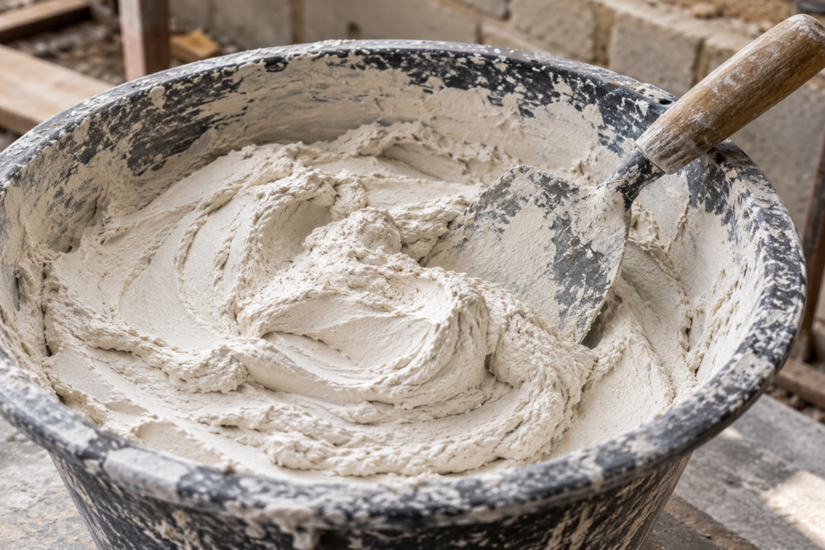
Get the plaster specification wrong on an old building and the wall pays for it. Blown finishes, salt staining, soft crumbling patches and rotten joist ends nearly always trace back to one decision: what went on the wall, and whether it lets moisture move. For anyone working on pre-1919 property, lime plaster is the material the building was built around. Knowing how it behaves is what separates a repair that lasts from one that fails inside a year.
What breathability means on a solid wall
Solid masonry walls built before roughly 1919 have no cavity and no modern damp-proof course. They were built to take on rain and then dry out through the surface once the weather clears. That wetting and drying cycle is how the wall stays sound.
Breathability is shorthand for vapour permeability, the ability of a material to let water vapour pass through rather than holding it back. Lime plaster stays vapour-permeable, so moisture that gets into the masonry can evaporate back out through both faces of the wall. It also buffers moisture, soaking up humidity when the air is damp and giving it back as the air dries, which helps steady indoor conditions.
Seal that same wall with a dense, water-resistant layer and the moisture has nowhere to go:
- Trapped moisture: Water backs up inside the masonry and carries ground salts with it.
- Visible damp: The moisture reappears higher up the wall or as staining on the finish.
- Hidden decay: Timber built into the wall, such as joist ends and lintels, stays wet and starts to rot.
Material choice on solid walls is building physics, not heritage sentiment.
Types of lime: hot lime, hydraulic and non-hydraulic
All building lime starts the same way. Limestone is burned in a kiln at around 900 to 1000°C, which drives off carbon dioxide and leaves calcium oxide, known as quicklime or burnt lime. What happens to that quicklime next decides which material ends up on your hawk.
Non-hydraulic lime (lime putty)
Non-hydraulic lime, also called lime putty, fat lime or air lime, is made by slaking quicklime with plenty of water. It sets only by carbonation, slowly taking in carbon dioxide from the air as it hardens.
- Set: Slow, by carbonation alone, so it needs protecting while it cures.
- Feel: Soft, sticky and the most breathable of the limes.
- Best use: Fine finishing coats, lath work and conservation of soft substrates.
- Supply: Sold as a matured putty, banked for months before use.
Hydraulic lime (NHL)
Hydraulic lime contains natural silicates, so it sets partly by reacting with water and partly by carbonation. It comes as a bagged powder and handles much like cement, which is why many trades find it the easier route in. Natural Hydraulic Lime is graded by strength under BS EN 459:
- NHL 2 (feebly hydraulic): Soft substrates and sheltered internal work.
- NHL 3.5 (moderately hydraulic): General internal and external plastering on most pre-1919 walls.
- NHL 5 (eminently hydraulic): Exposed spots such as chimneys, plus underpinning and floor slabs.
- Supply: Sold as a matured putty, banked for months before use.
The trade-off is blunt. The higher the grade, the stronger and faster the set, but the less breathable and flexible the result.
Hot lime (hot-mixed mortar)
Hot lime, or hot-mixed mortar, is quicklime mixed straight into damp sand so it slakes inside the mix rather than being made into putty first. It is the traditional method and builds good early strength and strong adhesion to the background. Expect it to work stiffer and stickier than putty or NHL, take more labour, and still need curing and cover like any lime.
For internal lime plastering on a standard pre-1919 solid wall, lime putty plaster or an NHL 3.5 system covers most jobs. Match the plaster to the background and the exposure, never to whatever sets quickest.
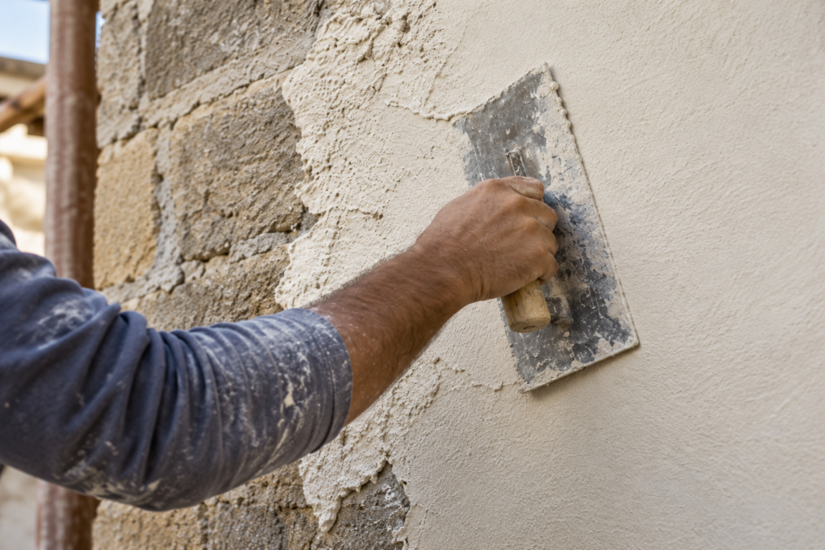
Why gypsum fails on solid walls
Gypsum skim is the default finish in modern housing, and over plasterboard on stud or dot-and-dab it does the job well. On a damp-prone solid wall it is the wrong tool, for three clear reasons:
- It dissolves: Gypsum is soluble in water, so prolonged damp softens it until it turns friable and powdery and loses its grip.
- It holds salts: Gypsum offers no resistance to hygroscopic salts, which crystallise behind the finish, blow the plaster and bring the damp straight back.
- It blocks drying: A gypsum layer slows evaporation from the inside face, so the wall cannot shed the moisture it takes on.
Le Society for the Protection of Ancient Buildings et Historic England both treat hard, non-breathable finishes as a leading cause of avoidable decay in traditional buildings. Lime is also the traditional choice around flues, fireplaces and chimney breasts, where gypsum is a poor match for the heat and the moisture movement.
This is the heart of the lime plaster vs gypsum question on old walls. Lime tolerates moisture without dissolving, lets the wall dry, flexes rather than cracking, and carries a mild self-healing quality as free lime recrystallises in fine cracks.
Lime and the UK rules
No single regulation orders you to use lime. The duties come from a few directions, and tradesmen are expected to know them.
Listed buildings and consent
Work that affects the character of a listed building needs listed building consent. Under Section 9 of the Planning (Listed Buildings and Conservation Areas) Act 1990 it is a criminal offence to alter a listed building in a way that affects its character without that consent, and the courts can impose an unlimited fine or a prison term. Swapping lime render or plaster for cement or gypsum counts as that kind of alteration, and liability does not stop at the owner:
- Who is liable: Owners, leaseholders and contractors can all be prosecuted.
- No time limit: Listed building enforcement has no cut-off, so old unauthorised work stays actionable.
- Check first: Confirm the consent position before you quote cement or gypsum on historic fabric.
Heritage guidance and standards
Historic England’s technical guidance on mortars, renders and plasters points to breathable lime for the repair of traditional buildings and warns against cement renders on pre-1919 solid walls. SPAB gives the same steer and treats hard cement coatings as one of the more damaging things you can do to old fabric.
On materials, BS EN 459-1 classifies building limes and sets what each product must contain, while BS EN 459-2 covers the test methods. Specify by lime type and grade against the standard and the job stays defensible.
Working safely with lime
Lime earns respect on site. Wet lime sits high on the pH scale, around 12, and quicklime is more hazardous again, so this is not a material to treat casually.
Work with lime and lime-based products falls under the Control of Substances Hazardous to Health Regulations 2002 (COSHH), which means you assess the risk and control exposure before anyone picks up a trowel. The Health and Safety Executive sets out the hazards clearly:
- Burns: Wet lime and cement can cause serious alkaline burns, and in bad cases these need skin grafts. The burn is progressive, so material left on the skin keeps doing damage.
- Delayed pain: Alkaline burns often give no sting at first, which is how lime water dripping inside a glove catches people out.
- Eyes and lungs: A splash in the eye is a medical emergency, and lime dust irritates the airways.
Control it the right way:
- PPE: Wear sealed goggles, long chemical-resistant gloves and an FFP3 dust mask when handling powders or slaking.
- First aid for skin: Rinse at once with plenty of clean water and keep rinsing, then get medical advice for any burn.
- First aid for eyes: Irrigate the eye continuously, commonly for 15 to 20 minutes, while arranging urgent medical help.
- Keep others clear: Keep quicklime and slaking vessels away from other trades, and never leave an open slaking container unattended.
Getting the specification right
Good lime plastering comes down to reading the wall, not forcing the wall to accept a modern finish. Check the background, judge the exposure, choose lime putty or the right NHL grade, and protect the work while it cures. Done properly, a lime plaster system keeps a solid wall sound, dry and legal to work on for decades, which is more than any gypsum skim on old masonry will manage.
Choosing the right plaster takes a solid understanding of the work. Tradefox helps you build practical skills through guided simulations you can repeat until each step feels familiar.